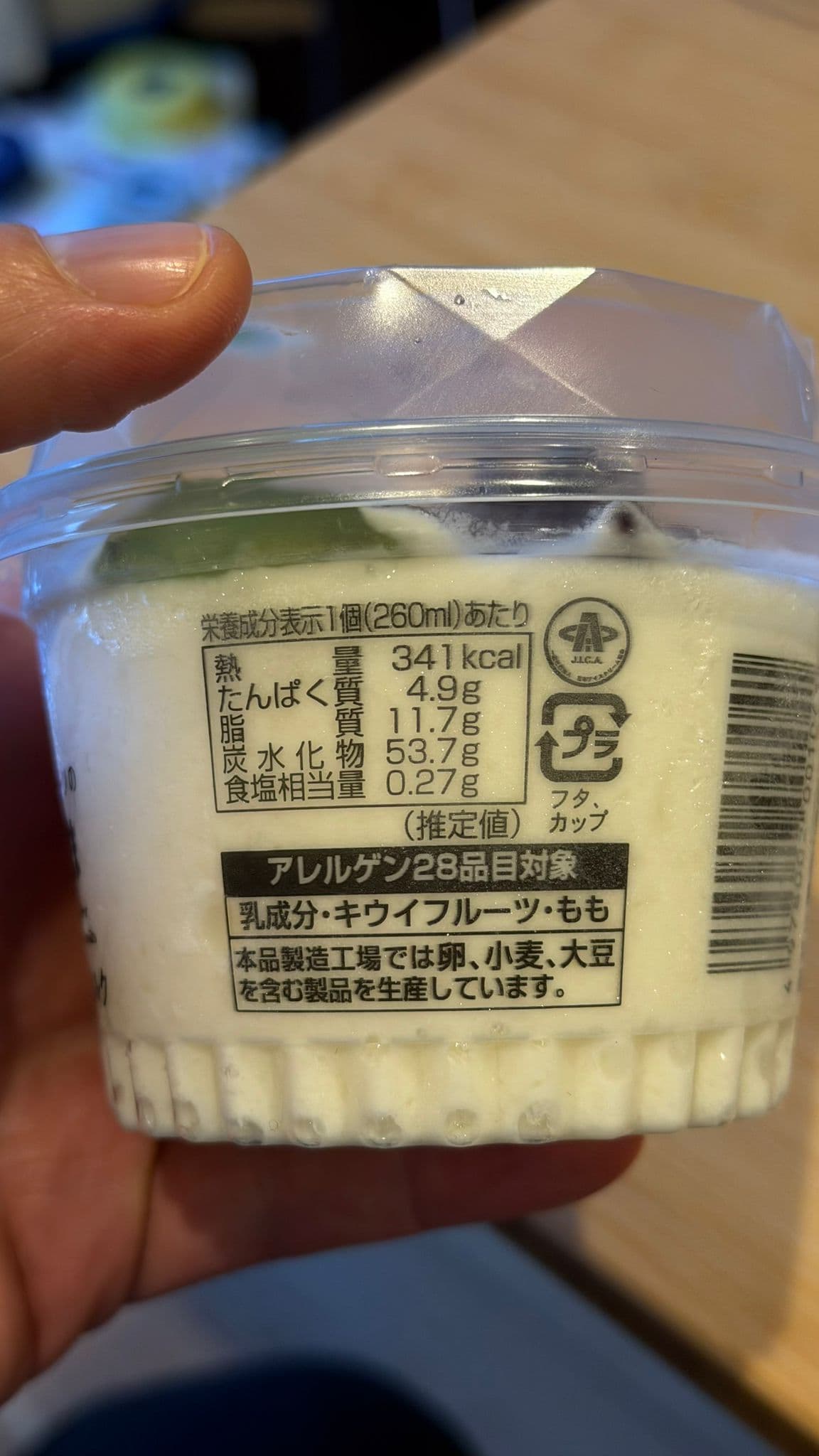
On a Japanese food label, pork, gelatin, alcohol and fish can hide in three places: the bracket that closes the ingredient list, (一部に…を含む) (ichibu ni … o fukumu, "contains in part"), the brackets inside a compound ingredient, and words that don't say what they are or what they are made from, such as 酒精 (ethyl alcohol), だし (stock), 油脂 (fat) and 乳化剤 (emulsifier). Pork and gelatin are among the 20 allergens Japan only recommends labelling, not among the 9 it requires, as of November 2026 (Consumer Affairs Agency, allergen handbook, April 2026, page 7; Nagoya City). Only the whole ingredient list (原材料名, genzairyōmei), brackets included, shows them.
Where do hidden ingredients hide on a Japanese label?
An ingredient can be on a Japanese label without its own word in the list: inside the closing allergen bracket, inside a compound ingredient's brackets, or behind a name that covers several substances. The rules come from the Consumer Affairs Agency (消費者庁, Shōhisha-chō):
| Where | What it looks like | What can hide there |
|---|---|---|
| The closing allergen bracket | (一部に小麦・大豆・豚肉を含む) | A label may gather its allergens in one bracket at the end of the list instead of after each ingredient (handbook, page 10). Pork or gelatin can then be named there and nowhere else |
| A compound ingredient | 調味にんにく(にんにく、アミノ酸液、その他) | Its parts that are third or lower by weight and under 5% each may be written その他 (sonota, others) (handbook, page 17; Osaka Prefecture) |
| A collective name | 乳化剤, 光沢剤, 香料 | One word for any of several additives. The label adds a source when the additive comes from one of the 29 allergens, as in 乳化剤(大豆由来), emulsifier from soy (handbook, page 20; additive annex) |
| A word that doesn't say what it is | 油脂, ショートニング, だし, 酒精 | Fat and shortening, plant or animal, and stock, fish or kelp, as the maker chose; 酒精 is ethyl alcohol |
Additives come after the ingredients, set apart by a slash (/) or under a heading of their own, 添加物 (tenkabutsu, additives); in the handbook's own example, 酒精 and 乳化剤 stand there (page 10).
The sections below take each hidden ingredient in turn, with labels tested by Okaasan in November 2026, each copied from its photo (how Okaasan tests).
Which words mean pork on a Japanese label?
Pork is written 豚肉 (butaniku) or 豚 (buta), and also hides in 豚脂 or ラード (lard), ポークエキス (pork extract), 豚骨 (pork bone) and チャーシュー (roast pork). Gelatin, shortening and emulsifiers can come from pigs too, and the label doesn't say so (Japan Tourism Agency, guide for restaurants, April 2024, page 25).
| Japanese | Reading | Meaning | What Okaasan's safety net shows |
|---|---|---|---|
| 豚肉, 豚, ポーク | butaniku, buta, pōku | Pork | Contains pork; not halal |
| 豚脂, ラード | tonshi, rādo | Lard | Contains pork; not halal |
| ポークエキス, 豚エキス | pōku ekisu, buta ekisu | Pork extract | Contains pork; not halal |
| 豚骨, とんこつ | tonkotsu | Pork bone, as in a broth | Contains pork; not halal |
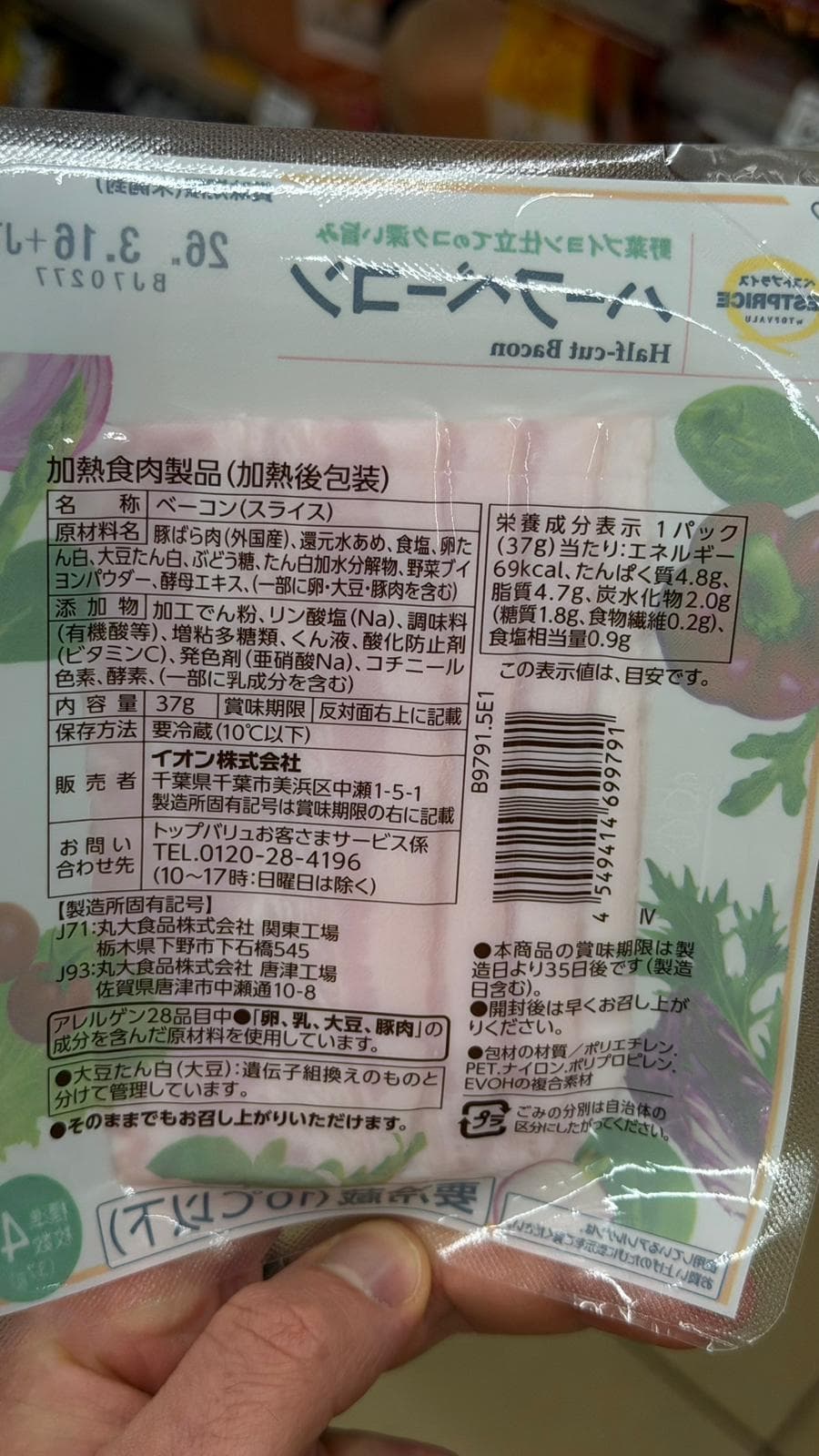
| ベーコン, チャーシュー, 焼豚 | bēkon, chāshū, yakibuta | Bacon, roast pork | Contains pork; not halal |
| 動物油脂 | dōbutsu yushi | Animal fat, animal not named | Not vegetarian; not halal |
| ゼラチン, コラーゲン | zerachin, korāgen | Gelatin, collagen | Pork unclear; not vegetarian; not halal |
Pork named only in the closing bracket. The Marumiya mapo tofu base (まあぼ豆腐のもと), tested by Okaasan in November 2026, prints on the side of its box:
●品名:まあぼ豆腐のもと ●原材料名:[麻婆豆腐の素]鶏肉(国産)、砂糖、醤油、食塩、米酢、豆板醤、ごま油、エキス(チキン、酵母)、大豆油、たん白加水分解物、発酵調味料/調味料(アミノ酸等)、着色料(カラメル、カロチノイド)、(一部に小麦・ごま・大豆・鶏肉・豚肉を含む)[トロミ粉]でん粉、生姜粉末、ねぎ、にんにく粉末
In English: [mapo tofu sauce] chicken (Japan), sugar, soy sauce, salt, rice vinegar, chili bean paste, sesame oil, extract (chicken, yeast), soybean oil, protein hydrolysate, fermented seasoning / seasoning (amino acids), colours (caramel, carotenoid) (contains wheat, sesame, soy, chicken and pork); [thickening powder] starch, ginger powder, green onion, garlic powder. Chicken is the only meat in the list. Pork is named once, in the closing bracket, and the label doesn't say which ingredient carries it. Okaasan showed the pack with pork and not halal 3 times in 3.

Not pork-free. 豚肉 (butaniku, pork) is named only in the closing bracket; the only meat in the list is chicken.
Pork in the list, not in the bracket. Hachi's Akakara retort curry (赤からカレー) lists 食用油脂(牛脂、豚脂), edible fat (beef fat, pork fat), and closes with (一部に小麦・乳成分・牛肉・大豆・鶏肉を含む): beef and chicken, no pork. The handbook asks a closing bracket to repeat allergens that a word like 豚脂 already shows (pages 10 and 37), but pork is only recommended, so leaving it out breaks no requirement. On this label, 豚脂 is the only place pork shows. Okaasan reads the list as well as the bracket, and showed the curry with pork 3 times in 3.
Ramen broths and ticket machines, where pork hides in restaurants, are covered in the guide to ramen without pork.
Is gelatin in Japanese food made from pork?
Gelatin (ゼラチン, zerachin) in Japan is made mostly from cattle or pigs and sometimes from fish, and the label doesn't have to say which (handbook, page 31). Japan's gelatin makers list the bones, skins and scales of cattle, pigs and fish as its raw materials, and make collagen peptide (コラーゲンペプチド) from the same gelatin (Japan Gelatine and Collagen Manufacturers Association, January 2021, page 4).
Gelatin is one of the 20 recommended allergens, so a label often names it in the allergen bracket or box, and sometimes only there. BASE BREAD chocolate, tested by Okaasan in November 2026:
●名称:菓子パン ●原材料名:チョコレートフラワーペースト(国内製造)、小麦全粒粉、大豆粉、小麦たんぱく、還元水飴、卵、ライ麦全粒粉、粗糖、油脂加工食品、米ぬか粉、パン酵母、チアシード、水あめ、醸造酢、海藻粉末、粉末油脂、サトウキビ抽出物、昆布粉末/増粘剤(加工でん粉)、調味料(有機酸等)、酸味料、乳化剤、増粘多糖類、香料、(一部に小麦・卵・乳成分・大豆・ゼラチンを含む)
アレルゲン(28品目対象)小麦・卵・乳成分・大豆・ゼラチン
No ingredient in the list is gelatin: ゼラチン appears in the closing bracket and in the allergen box. Milk does the same. In Okaasan's latest test of this pack, Okaasan's AI alone called it vegetarian 3 times in 3; the safety net read the gelatin in the allergen list and corrected all three (how Okaasan tests).
Not vegetarian. ゼラチン (zerachin, gelatin) is named only in the allergen lines. Pork: unclear, since the label doesn't say what the gelatin is made from.
A Hida beef garlic meat miso (飛騨牛にんにく肉味噌) tested by Okaasan does the same: its list closes with (一部に小麦・大豆・牛肉・ごま・ゼラチンを含む), and its first ingredient, 調味にんにく(にんにく、アミノ酸液、その他), seasoned garlic, ends its own bracket with その他.
Okaasan's safety net reads ゼラチン and コラーゲン as not vegetarian and not vegan, as not halal unless the pack is marked halal, and pork as unclear.
Which Japanese ingredients contain alcohol?
On a Japanese label, alcohol is written 酒精 (shusei, ethyl alcohol), アルコール, 醸造アルコール (brewing alcohol), 酒 or 清酒 (sake), みりん (mirin) or 洋酒 (Western liquor), and soy sauce, miso and fermented seasonings can hold some without the word.
| Japanese | Reading | What it is | What Okaasan's safety net shows |
|---|---|---|---|
| 酒精 | shusei | Ethyl alcohol (デジタル大辞泉) | Contains alcohol; not halal |
| アルコール, 醸造アルコール | arukōru, jōzō arukōru | Alcohol, brewing alcohol | Contains alcohol; not halal |
| 酒, 清酒, 料理酒 | sake, seishu, ryōrishu | Sake, cooking sake | Contains alcohol; not halal |
| 本みりん, みりん | hon-mirin, mirin | Sweet rice seasoning, a liquor of about 14% alcohol | Contains alcohol; not halal |
| 洋酒, ブランデー, ラム酒 | yōshu, burandē, ramushu | Western liquor, brandy, rum | Contains alcohol; not halal |
| 発酵調味料 (also はっ酵, 醗酵) | hakkō chōmiryō | Fermented seasoning: brewed like sake or mirin, then salted so it can't be drunk | Alcohol and halal unclear |
| みりん風調味料 | mirin-fū chōmiryō | Mirin-style seasoning, under 1% alcohol | Contains alcohol; not halal |
| 醤油, しょうゆ | shōyu | Soy sauce | Alcohol and halal unclear; contains alcohol when アルコール is listed |
| 味噌, みそ | miso | Miso | Alcohol and halal unclear |
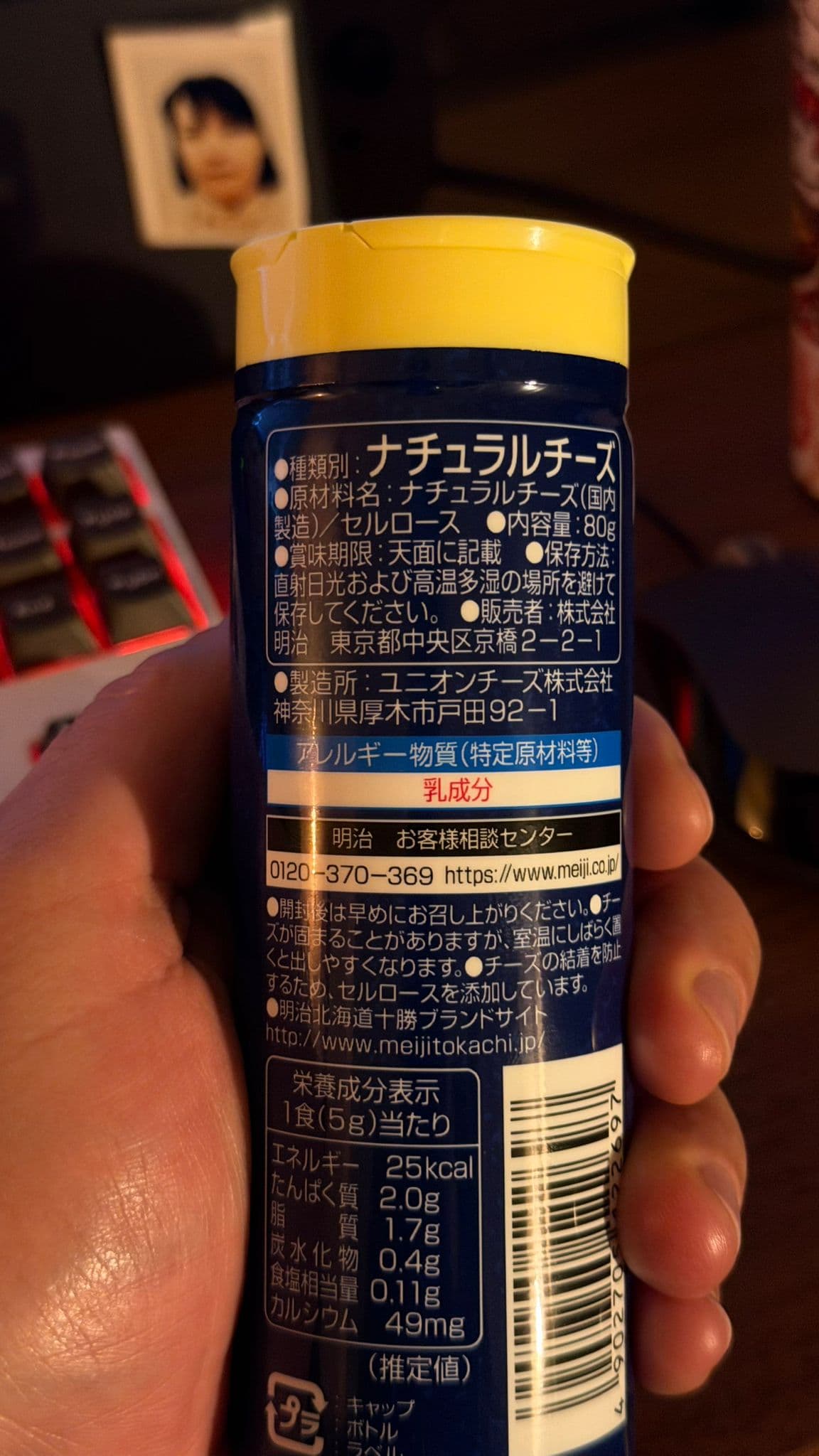
Hon-mirin holds about 45% sugar and about 14% alcohol, and is a liquor under the liquor tax law. Mirin-style seasoning has under 1% alcohol, and a fermented seasoning goes through alcoholic fermentation, then is salted to make it undrinkable: neither of these two counts as a liquor (National Tax Agency; Takara Shuzo). The Kikkoman hon-mirin tested by Okaasan prints アルコール分:13.5度以上14.5度未満, 13.5 to under 14.5% alcohol. Brewed soy sauce holds alcohol from fermentation, over 2% by volume in Kikkoman's traditional soy sauces (Kikkoman USA), and some makers add more: the Wadakan koikuchi soy sauce tested by Okaasan lists 脱脂加工大豆(インド製造又はアメリカ製造)(分別生産流通管理済み)、小麦、食塩/アルコール、調味料(アミノ酸等): defatted soybeans, wheat, salt, then alcohol after the slash.
Alcohol after the slash in miso. Nihonkai rice miso (日本海みそ), tested by Okaasan in November 2026:
名称 米みそ 原材料名 米(国産又は豪州産)、大豆、食塩/酒精
Rice, soybeans and salt, then 酒精 after the slash. In Okaasan's latest test of this tub, Okaasan's AI alone called it halal 3 times in 3; the safety net read 酒精 and showed it not halal each time (how Okaasan tests).
Not halal. 酒精 (shusei) is ethyl alcohol, listed after the slash. Rice, soybeans and salt are fine for vegan.
A fermented seasoning in kana. The Nissui cheese kamaboko (fish paste in a casing) lists はっ酵調味料, fermented seasoning written partly in kana. In Okaasan's tests of 10 November 2026, that spelling slipped past the safety net: the pack was shown alcohol-free 3 times in 3. Since that day, the safety net reads はっ酵 and 醗酵 as 発酵, and in Okaasan's latest test of the pack, on 11 November 2026, it showed alcohol as unclear 3 times in 3.
Whether a trace of alcohol in soy sauce or another seasoning counts is a question Muslims answer differently (Japan Tourism Agency, page 25). Okaasan's safety net shows halal as not suitable when alcohol itself is listed, and as unclear when soy sauce, miso or a fermented seasoning is the only doubt.
Does amazake (甘酒) contain alcohol?
Amazake has no alcohol, or only a trace, although its name holds 酒 (sake), according to Japan's Ministry of Agriculture, Forestry and Fisheries (MAFF, traditional foods). It is made from rice koji (米こうじ, kome kōji), under 1% alcohol (MAFF Q&A), or from sake lees (酒粕, sakekasu), which hold a little alcohol that heating drives off (MAFF, traditional foods).
Two amazake tested by Okaasan in November 2026:
| Product | What the label prints | What Okaasan showed, 3 analyses each |
|---|---|---|
| Yomeishu amazake (養命酒製造 甘酒) | 名称:清涼飲料水 甘酒, 原材料名:甘酒(米、米こうじ、食塩)(国内製造)、オリゴ糖、パイナップル果実抽出物(セラミド含有)/pH調整剤、(一部に大豆を含む); ノンアルコール (non-alcoholic) on the box | Alcohol-free and halal every time |
| Misakiya amazake (三崎屋醸造 あま酒) | 名称 あま酒, 原材料名 米(有機JAS認証新潟県産コシヒカリ) | Alcohol-free and halal every time |
The Yomeishu box prints 酒 in the drink's name, 甘酒, and in the company's, 養命酒製造, and lists no alcohol. Okaasan's safety net reads 甘酒 as alcohol-free when koji (こうじ, 麹 or 糀) follows it in the list, as unclear when it doesn't, and 酒粕 as alcohol.
Where does fish hide in Japanese food?
Fish enters Japanese food mostly as stock and seasoning: だし (dashi, stock), かつお節 (bonito flakes), 煮干し or いりこ (dried sardines), 魚醤 (gyoshō, fish sauce), 〜エキス (extract) and fish pastes such as ちくわ (chikuwa). Classic dashi is made from kelp (昆布, konbu) and bonito flakes (MAFF), and Japan's tourism agency tells restaurants that vegetarians avoid bonito dashi even when no fish is served, and to use kelp dashi for them (Japan Tourism Agency, pages 14 and 21). Most fish and shellfish are on no allergen list: the fish and shellfish allergy guide has the lists and more labels.
A Kansai-only rice ball, 関西限定 かやくごはんおむすび (made by Musashino), tested by Okaasan:
原材料名 うるち米(国産)、醤油、鶏肉、ごぼう、和風調味料、人参、砂糖、こんにゃく、ちくわ、油揚げ、だし、植物油脂、食塩/pH調整剤、調味料(アミノ酸等)、加工澱粉、グリシン、凝固剤、糊料(キサンタン)、水酸化Ca、酸味料、(一部に卵・小麦・大豆・鶏肉・さばを含む)
A chicken and vegetable rice ball, with ちくわ (fish paste) in the middle of the list, a だし that doesn't say what it is made from, and さば (saba, mackerel) only in the closing bracket. The Lawson Caesar dressing tested by Okaasan lists ほたてエキス (scallop extract); in Okaasan's latest test of it, Okaasan's AI alone called the dressing vegetarian 3 times in 3, and the safety net corrected each.
Okaasan's safety net reads a plain だし, 出汁 or ダシ as unclear for vegetarian and vegan, かつおだし as fish, and 昆布だし or しいたけだし as no doubt.
Which fats and emulsifiers can be animal?
油脂 (yushi, fat), 食用油脂 (edible fat), ショートニング (shortening), マーガリン (margarine) and 乳化剤 (nyūkazai, emulsifier) can be plant or animal: Japan's shortening standard names 豚脂 (lard) among its fats, which a label may write as 食用動物油脂 (JAS 0989:2024, MAFF), and the tourism agency names emulsifier, shortening, gelatin and collagen among the additives that can come from pigs (page 25). 植物油脂 (vegetable fat) and 乳化剤(大豆由来) (emulsifier from soy) say their source.
AEON white bread, tested by Okaasan in November 2026:
原材料名 小麦粉(国内製造)、砂糖、ショートニング、パン酵母、食塩、発酵風味料、乳等を主要原料とする食品、(一部に乳成分・小麦を含む)
添加物 ソルビトール、乳化剤、酢酸ナトリウム、イーストフード、ビタミンC、(一部に乳成分・小麦・大豆を含む)
Neither ショートニング nor 乳化剤 says its source. Milk rules out vegan; the shortening, which could be animal fat, keeps Okaasan's safety net from showing vegetarian or halal as suitable; and 発酵風味料 (fermented flavouring) makes alcohol unclear.
Okaasan's safety net reads these words this way:
- 油脂, 食用油脂, 加工油脂, ショートニング, マーガリン with no plant source: vegan, vegetarian, halal and kosher unclear.
- 乳化剤 or グリセリン with no plant source: vegan, halal and kosher unclear; not counted for vegetarian.
- 動物油脂: not vegetarian, not halal.
- A plant source in brackets, such as 油脂(なたね) or 乳化剤(大豆由来), clears the doubt. So does a vegan statement printed on the pack, such as 動物性原料不使用 (no animal ingredients): Okaasan then reads those fats and emulsifiers as plant. The guide to "no additives" and factory labels shows one.
Which additives can come from insects or animals?
Cochineal (コチニール色素, kochinīru shikiso), a red colouring, is made from the cochineal insect, and shellac (シェラック, sherakku), a glazing agent, from the secretion of the lac insect (Consumer Affairs Agency, additive annex; Japan Food Chemical Research Foundation, list of August 25, 2025). Shellac can also hide behind 光沢剤 (kōtakuzai, glazing agent), a collective name that covers it as well as waxes such as beeswax (ミツロウ), carnauba wax (カルナウバロウ) and paraffin wax (パラフィンワックス) (additive annex, 1-4 and 2-1).
| Japanese | Reading | What it is | What Okaasan's safety net shows |
|---|---|---|---|
| コチニール色素, カルミン酸色素, カルミン酸, コチニール | kochinīru shikiso, karumin-san | Red colouring from an insect | Not vegan, not vegetarian, not kosher; halal unclear |
| シェラック, セラック | sherakku, serakku | Glazing agent from the lac insect | Not vegan, not vegetarian; halal and kosher unclear |
| 光沢剤 | kōtakuzai | Glazing agent: shellac, beeswax, carnauba or paraffin | Vegan, vegetarian, halal and kosher unclear, unless the wax is named in brackets |
| L-システイン塩酸塩 | eru-shisutein ensan'en | L-cysteine, an amino acid used in Japan in bread and fruit juice (Food Safety Commission of Japan, 2022), made from feathers, hair or hog bristles, or by fermentation (American Society of Baking); the EU bars human hair as a source of the food additive (Regulation (EU) No 231/2012, E 920) | Vegan, vegetarian, halal and kosher unclear |
None of the 115 labels in Okaasan's tests names cochineal, shellac or L-cysteine; two HARIBO packs, imported and labelled in Japanese, print 光沢剤 alone. On HARIBO pacifier gummies (おしゃぶりグミ, made in Germany), the Japanese sticker lists:
原材料名 水あめ、砂糖、ゼラチン、ぶどう糖/クエン酸、着色料(果汁、アントシアニン、野菜ジュース、フラボノイド、スピルリナ青)、香料、光沢剤、(一部にオレンジ・りんご・ゼラチンを含む)
The Italian text printed on the same bag, partly hidden by a fold, names the glazing agent: agente di rivestimento: cera d'api, beeswax. The Japanese sticker says only 光沢剤. Here the gelatin already rules out vegetarian.
What can't a Japanese label tell you?
A label shows what the maker had to print and what it chose to print, nothing more, and some food has no label at all.
- Restaurants. Food served to eat on the premises has no allergen labelling duty (CAA Q&A, I-7; Nagoya City): a menu gives a dish's name, not its recipe.
- Factory warnings. A line such as 本品製造工場では…を含む製品を生産しています is recommended, not required: see the guide to "no additives" and factory labels.
- Milk and gluten. Milk also hides in 乳糖 (lactose) and カゼイン (casein), and barley and malt don't have to be declared: see the dairy-free guide and the gluten-free guide.
- Recipes change. These are the labels Okaasan tested in November 2026. Read the pack in your hand.
Okaasan tested its scan on 115 real Japanese labels in November 2026, 3 times each: its AI alone would have made 389 dangerous mistakes, and after Okaasan's safety net, 0 (how Okaasan tests). That is a dated test result, not a guarantee.
FAQ
Is dashi vegetarian?
Often not. Classic dashi is made from kelp (昆布) and bonito flakes (かつお節), and dried sardines (煮干し) are also used; kelp-only and shiitake dashi contain no fish. A label or a menu that says only だし doesn't tell you which, so ask, or look for 昆布だし on the pack.
Is gelatin in Japan made from pork?
It can be, and the label doesn't have to say. Japanese gelatin is made mostly from cattle or pigs, sometimes from fish. Gelatin is one of Japan's 20 recommended allergens, so look for ゼラチン in the ingredient list and in the allergen bracket or box, where it is sometimes the only mention.
Does Japanese soy sauce contain alcohol?
Brewed soy sauce does: fermentation makes alcohol, over 2% by volume in Kikkoman's traditional soy sauces, and some makers add アルコール after the slash, as the Wadakan soy sauce tested by Okaasan does. Muslims differ on whether such amounts count.
What does 酒精 mean on a Japanese label?
酒精 (shusei) means ethyl alcohol, so a product that lists it isn't alcohol-free. On labels tested by Okaasan in November 2026, it appears after the slash in a rice miso and in a Hida beef meat miso.
Does amazake contain alcohol?
Amazake made from rice koji (米こうじ) has under 1% alcohol, according to Japan's agriculture ministry; amazake made from sake lees (酒粕) starts from a sake by-product that holds a little alcohol. Look for 米こうじ or 酒粕 in the ingredient list: the 酒 in 甘酒 alone doesn't decide it.
Are Japanese snacks vegetarian?
Many are, many aren't: gelatin, bonito extract and shrimp turn up in sweets and crackers. Of 14 famous Japanese snacks Okaasan tested in November 2026, 8 are vegetarian by their labels, and 3 contain gelatin.
Read the whole label at once
The closing bracket, the allergen box, the words after the slash: scan the label with Okaasan and it reads them from one photo, checks them against the diets and allergens in your profile, and shows "unclear" when the label can't tell. From $9 a month, or $14 once for a 31-day Traveler Pass.