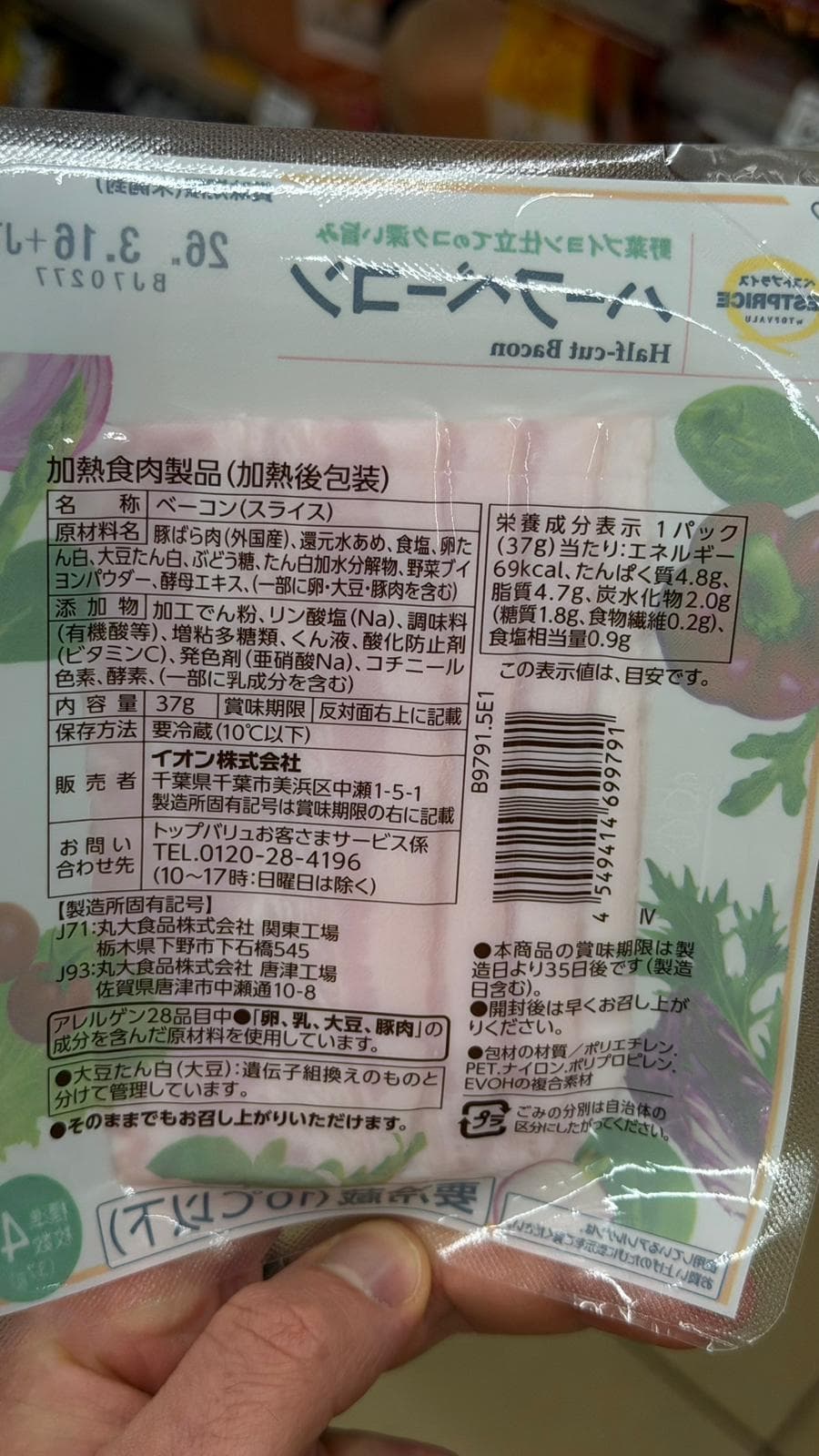
Food in Japan is not halal by default: pork, alcohol and meat not slaughtered by Islamic rules are common in Japanese food, often inside seasonings and additives (Japan Tourism Agency, April 2024, page 25). On a label they show up in the ingredient list (原材料名, genzairyōmei) as words such as 豚脂 (tonshi, pork fat), ポークエキス (pōku ekisu, pork extract), 酒精 (shusei, ethyl alcohol) or みりん (mirin, a sweet rice wine). On a pack, only a printed halal certification settles it, and since Japan has no central agency for halal certification (Japan National Tourism Organization), the mark names the body that issued it.
Is food in Japan halal by default?
No. Halal food leaves out pork and everything made from it, alcohol, and meat from animals not slaughtered by Islamic rules, and Japanese recipes, seasonings and additives use all three (観光庁, page 25; 福岡県, page 14).
What Japan's tourism agency (観光庁) tells restaurants and hotels about Muslim guests, in its guide of April 2024:
| Food | What the guide says |
|---|---|
| Pork | Not allowed, with everything made from it: organs, skin, pork extract, lard, and pork-derived ingredients in seasonings and additives, such as emulsifiers, shortening, gelatin and collagen (page 25) |
| Alcohol | Intoxicating drinks are not allowed, so many Muslims avoid alcohol, mirin included. Some also avoid the trace of alcohol in soy sauce and other seasonings, and opinions differ on trace alcohol and on ethanol (page 25) |
| Meat | Only from halal slaughter. Chicken from Brazil and beef from Australia are often halal-certified, and some Japanese chicken and beef is too (page 25) |
| Plants, eggs, milk | Allowed: what grows from the ground and what comes from living animals (page 24) |
Fukuoka Prefecture's handbook for restaurants says the same of beef, horse, lamb and chicken, and adds that devout Muslims may refuse cooking sake and mirin even when the sauce has been boiled (福岡県, page 14). How each rule is read differs by school, country, culture and person, and the tourism agency's guide leaves what to eat to each Muslim (観光庁, pages 24 and 29).
On a label, the allergen line doesn't settle it. Pork is one of the 20 allergens Japan only recommends labelling, not one of the 9 it requires, as of November 2026 (消費者庁 handbook, page 7; 京都府), and alcohol is on neither list. Read the ingredient list itself: it runs from the heaviest ingredient to the lightest, with the additives after a slash (/), as reading Japanese food labels explains.
Which words on a Japanese label mean pork?
Pork is written 豚 (buta or ton), ポーク (pōku), or as a product made from it, such as ラード (lard). Some other words can be pork without saying so:
| Japanese | Reading | Meaning | For halal |
|---|---|---|---|
| 豚肉, 豚, ポーク | butaniku, buta, pōku | Pork | Pork |
| 豚脂, ラード | tonshi, rādo | Pork fat, lard | Pork |
| ポークエキス | pōku ekisu | Pork extract | Pork |
| 豚骨, とんこつ | tonkotsu | Pork bone broth | Pork |
| チャーシュー, 焼豚 | chāshū, yakibuta | Roast or braised pork | Pork |
| ベーコン | bēkon | Bacon | Pork |
| ゼラチン, コラーゲン | zerachin, korāgen | Gelatin, collagen | Made from cattle, pig or fish; the label doesn't say which (next section) |
| 乳化剤, ショートニング | nyūkazai, shōtoningu | Emulsifier, shortening | Can be pork-derived (観光庁, page 25); a source in brackets, such as 乳化剤(大豆由来), "from soy", settles it |
| 油脂, 食用油脂 | yushi, shokuyō yushi | Fat, edible fat | Any fat or oil, lard included (農林水産省) |
Pork can sit in two places on a label. Allergens are normally written right after the ingredient that holds them, as in 醤油(小麦・大豆を含む), or, as an exception, all together in one bracket at the end of the list, (一部に…を含む) (ichibu ni … o fukumu, "contains in part") (消費者庁 handbook, pages 8 and 10; 熊本県). Two labels tested by Okaasan in November 2026 show both cases.
A corned beef mayonnaise onigiri (直巻おむすび コンビーフマヨネーズ), made by Musashino (武蔵野). No pork in the list, but pork and gelatin in the closing bracket:
胡椒入り御飯(国産米使用)、コンビーフ炒め煮(コンビーフ、玉ねぎ、ビーフ風味調味料、牛肉風味ペースト、醤油、砂糖、植物油脂、食塩)、マヨネーズソース、海苔(韓国)/糊料(加工澱粉、グァー)、調味料(アミノ酸等)、pH調整剤、カゼインNa、酢酸Na、グリシン、発色剤(亜硝酸Na)、(一部に卵・乳成分・小麦・大豆・牛肉・豚肉・鶏肉・ゼラチン・りんごを含む)
In English: pepper rice, corned beef simmered with onion, beef-flavoured seasoning, beef-flavoured paste, soy sauce, sugar, vegetable fat and salt, mayonnaise sauce, seaweed / thickeners, seasoning, pH adjuster, sodium caseinate, sodium acetate, glycine, colour fixative (contains egg, milk, wheat, soy, beef, pork, chicken, gelatin, apple). Okaasan showed it with pork and not halal 3 times in 3.

Not halal. 豚肉 (butaniku, pork) and ゼラチン (zerachin, gelatin) are named only in the bracket at the end of this corned beef onigiri.
Hachi Akakara retort curry (赤からカレー). The other way round: pork fat in the list, no pork in the closing bracket. The list holds 鶏肉 (chicken) and 食用油脂(牛脂、豚脂), edible fat from beef and pork, and ends with (一部に小麦・乳成分・牛肉・大豆・鶏肉を含む): wheat, milk, beef, soy, chicken. Okaasan read the 豚脂 and showed pork 3 times in 3. Pork in ramen broths and curry roux is covered in ramen without pork in Japan.
Which words on a Japanese label mean alcohol?
Alcohol on a Japanese label is written アルコール (arukōru), with 酒 (sake or shu, liquor) inside a word such as 酒精 or 洋酒, or as the name of a drink or a seasoning made from one, such as みりん. Mirin counts as a liquor (混成酒類) in the tourism agency's guide (観光庁, page 31).
| Japanese | Reading | Meaning | For halal |
|---|---|---|---|
| アルコール, 醸造アルコール | arukōru, jōzō arukōru | Alcohol, distilled alcohol | Alcohol |
| 酒精 | shusei | Ethyl alcohol (デジタル大辞泉; 栃木県), often after the slash (/) with the additives | Alcohol |
| 酒, 日本酒, 料理酒 | sake, nihonshu, ryōrishu | Sake, cooking sake | Alcohol |
| みりん, 本みりん | mirin, hon-mirin | Sweet rice wine for cooking, about 14% alcohol (国税庁) | Alcohol |
| 洋酒 | yōshu | Western liquor: whisky, brandy, wine, beer (デジタル大辞泉) | Alcohol |
| ワイン, ブランデー, ラム酒 | wain, burandē, ramushu | Wine, brandy, rum | Alcohol |
| 粉末酒 | funmatsushu | Powdered liquor | Alcohol |
| 醤油, しょうゆ | shōyu | Soy sauce | Alcohol forms as it ferments (広島県): more than 2% by volume in Kikkoman's traditional soy sauces (Kikkoman USA) |
| 味噌, みそ | miso | Fermented soybean paste | Alcohol forms as it ferments (広島県), and some miso has alcohol added (JNTO), written 酒精 |
| 発酵調味料 | hakkō chōmiryō | Fermented seasoning | The mirin-type one holds alcohol, with salt added so it can't be drunk (国税庁; キング醸造, in 日刊ゲンダイ, August 2025) |
Labels tested by Okaasan in November 2026:
- Kikkoman hon-mirin (本みりん, 1 litre): 米、もち米、米こうじ、醸造アルコール、糖類, rice, glutinous rice, rice koji, distilled alcohol, sugars; アルコール分13.5度以上14.5度未満, 13.5% to under 14.5% alcohol. Shown with alcohol and not halal 3 times in 3.
- Wadakan koikuchi soy sauce (こいくちしょうゆ): 脱脂加工大豆、小麦、食塩/アルコール、調味料(アミノ酸等), defatted soybeans, wheat, salt / alcohol, seasoning. The alcohol is written as an additive. Shown with alcohol and not halal 3 times in 3.
Nihonkai rice miso (日本海みそ, 800 g). Its whole ingredient list, as printed:
米(国産又は豪州産)、大豆、食塩/酒精
Rice (Japan or Australia), soybeans, salt / ethyl alcohol. Okaasan's AI alone called this miso halal 3 times in 3; Okaasan's safety net read 酒精 and showed it not halal each time.
Not halal. 酒精 (shusei) is ethyl alcohol, added after the slash in this rice miso.
Whether a trace of alcohol counts is a point on which opinions differ (観光庁, page 25). Some eat eel in a sauce of mirin and cooking sake once it has been boiled, and devout Muslims may still refuse it (福岡県, pages 9 and 14). Okaasan shows any alcohol written on a label as not halal, and halal as "unclear" when soy sauce, miso or a fermented seasoning is the only doubt. Sake and mirin in izakaya dishes are covered in how to read an izakaya menu.
Is gelatin in Japan halal?
Not by its label: gelatin in Japan is made from the bones, skins or scales of cattle, pigs or fish (日本ゼラチン・コラーゲン工業組合, via 厚生労働省), and the label says only ゼラチン. The tourism agency names gelatin and collagen among the ingredients that can come from pork (観光庁, page 25). Gelatin is also one of the 20 recommended allergens, so it may show only in the allergen bracket, as on the onigiri above.
It turns up where few expect it. A Glico apple yogurt (140 g), tested by Okaasan in November 2026, lists ゼラチン sixth, after milk products, raw milk, apple, sugar and milk protein, and again in its bracket, (一部に乳成分・りんご・ゼラチンを含む). Okaasan showed it not halal, with pork "unclear", 3 times in 3. Gelatin in Japanese sweets, such as Lotte's Bacchus chocolate and UHA Mikakuto's Ninja Meshi gummy, is listed in famous Japanese snacks, checked label by label.
Beef and chicken words count the same way, since meat is halal only from halal slaughter: 牛脂 (gyūshi, beef fat), ビーフエキス (bīfu ekisu, beef extract), チキンエキス (chikin ekisu, chicken extract) and 動物油脂 (dōbutsu yushi, animal fat).
Is seafood halal in Japan?
All four Sunni schools of Islamic law accept fish; other sea animals divide them. The Shafi'i, Maliki and Hanbali schools generally accept all seafood, while the Hanafi school accepts only fish, so not crab, lobster, clams, squid or octopus, and its scholars differ on shrimp (Islamic Services of America, March 2025; SeekersGuidance, January 2021; Darul Ifta Birmingham). Japan's tourism agency notes that these readings differ by school, country, culture and person (観光庁, page 24).
Processed seafood is another matter, since it can hold alcohol. Two labels tested by Okaasan in November 2026:
- Tuna shiokara (塩辛, salted tuna innards, 160 g): まぐろ内臓 (tuna innards) first, 発酵調味料 (fermented seasoning) fourth and, among the additives, 酒精 (ethyl alcohol). Shown not halal 3 times in 3.
- Toyo Suisan fish sausage with cheese (魚肉ねり製品, 4 sticks): 魚肉 (fish), プロセスチーズ (processed cheese) and, sixth in the list, ワイン (wine). Shown not halal 3 times in 3.
Okaasan's halal check doesn't count fish or shellfish against halal. It shows seafood on a line of its own, so a reader who avoids shrimp or squid can read that line.
What does a halal mark on a Japanese pack mean?
A halal mark means a certifying body of experts in Islam and in food hygiene has judged the product halal and guarantees it (観光庁, page 30; 福岡県, page 7). There is no single world standard, and more than 300 certifying bodies are said to exist (観光庁, page 30); in Japan, no central agency certifies (JNTO). So read the body's name on the mark.
Halal certification bodies based in Japan include the Japan Halal Association, the Nippon Asia Halal Association and the Muslim Professional Japan Association. An imported product may carry the mark of a body abroad, as the karaage below does.
A frozen chicken karaage from Thailand (お肉にこだわった美味しい唐揚げ, 1 kg), imported by Kobe Bussan (神戸物産), the company that runs the Gyomu Super (業務スーパー) chain (神戸物産); the bag prints Gyomu Super's website. Its ingredient list, as printed:
鶏もも肉、しょうゆ加工品、にんにくペースト、砂糖、でん粉、食塩、衣(小麦粉、でん粉、砂糖、食塩、ぶどう糖、こしょう)、揚げ油(大豆油)/安定剤(加工デンプン)、調味料(アミノ酸等)、ポリリン酸Na、パプリカ色素、(一部に小麦・大豆・鶏肉を含む)
Chicken thigh, processed soy sauce, garlic paste, sugar, starch, salt, a batter, soybean frying oil and additives. Below the barcode, the bag prints a halal logo with the words THE CENTRAL ISLAMIC COUNCIL OF THAILAND and a certificate number starting CICOT.HL.
In its first test, on November 12, 2026, Okaasan showed this karaage as not halal 3 times in 3: logos weren't read, and the list doesn't say the chicken is halal. Since that day, Okaasan reads a halal certification printed on the pack in a step of its own. Run again 3 times, Okaasan read the Central Islamic Council of Thailand's mark 3 times in 3 and showed halal as fine, while its AI alone still answered "not halal" each time. On 12 products with meat or gelatin and no mark, run twice each, Okaasan invented no certification in 24 analyses (how Okaasan tests).
Halal-friendly. The bag prints the halal mark of the Central Islamic Council of Thailand, and 鶏もも肉 (tori momo niku, chicken thigh) is its only meat.
The certification settles halal for Okaasan only when it names its body: an Islamic council or committee, or "halal" with a certifier, as in ハラール認証 or HALAL MUI. A bare "Halal", "halal friendly" or "Muslim friendly" doesn't count. Even with a certification, pork or alcohol written on the label, or an alcoholic drink, still shows not halal.
Which foods in a Japanese shop are halal by their label?
Foods whose ingredient list holds nothing that rules halal out or leaves it in doubt: no pork, alcohol, meat or gelatin, and no fat or emulsifier of unstated source. Plants, eggs and milk are allowed in the tourism agency's guide (観光庁, page 24), and a processed version stays halal by its label only when nothing added to it raises a doubt. Four products tested by Okaasan in November 2026 came out halal by their label 3 times in 3:
| Product | Ingredient list |
|---|---|
| Lawson packaged Koshihikari rice, 250 g | うるち米 (rice) |
| Del Monte cut tomatoes, made in Spain | トマト、トマトピューレー/クエン酸 (tomatoes, tomato purée / citric acid) |
| Morinaga low-fat milk, 900 ml | 生乳100% (100% raw milk) |
| Mitsuya Cider (Asahi), 600 ml | 果糖ぶどう糖液糖 (high-fructose corn syrup) and additives: nothing animal, no alcohol |
Halal by its label is not a certification. Flavouring (香料, kōryō) is printed without its source, and Okaasan's check doesn't count it. Of 14 famous Japanese snacks Okaasan tested, 3 list nothing that rules out halal and none carries a certification (the snacks guide).
How does Okaasan check halal on a label?
Okaasan reads the Japanese ingredient list, the allergen line and the factory warning from the photo, then its safety net compares the AI's halal answer with them. The safety net can only make that answer more careful, except for a printed certification.
- Not halal: a pork word anywhere in the list or the allergen line (豚, ポーク, ラード, ベーコン, チャーシュー, 焼豚, とんこつ); an alcohol word (アルコール, 酒 as in 酒精 or 洋酒, みりん, ワイン, ビール, リキュール, ブランデー, ウイスキー, ラム酒, 焼酎, エタノール); meat, animal fat or gelatin (such as 牛, 鶏, 動物油脂, ゼラチン, コラーゲン), unless the label says halal (ハラール or halal in the product's name or list, or a certification).
- Unclear: soy sauce, miso or a fermented or brewed seasoning (発酵調味料, 醸造調味料); a fat or emulsifier whose source isn't given (油脂, ショートニング, マーガリン, 乳化剤); cheese, which may be set with animal rennet; L-cysteine, a glazing agent (光沢剤), cochineal or shellac; meat or gelatin named only in a factory warning. Each of these unless the label says halal. Pork named only in a factory warning is unclear in every case.
- No list, no answer: without an ingredient list read on the photo, nothing is shown as fine.
- Fine despite the AI: a halal certification that names its body, as on the karaage above, unless pork or alcohol is written on the label or the product is an alcoholic drink.
On menus, a meat dish shows not halal unless the menu says halal, and a curry never shows halal for sure unless the menu calls it halal or vegan. Okaasan tested its scan on 115 real Japanese products, 3 times each, in November 2026: its AI alone would have made 389 dangerous mistakes, and after Okaasan's safety net, 0 (how Okaasan tests).
Can you eat halal at Japanese restaurants?
Yes, at restaurants that serve halal food, which exist in Tokyo for example (JNTO; nippon.com). Elsewhere, ask: Japan's food labelling standards don't apply to food served to eat on the premises (食品表示基準, Article 1; 三重県).
The tourism agency describes what each sign covers (観光庁, page 30):
- ハラール認証 (halal certified): halal ingredients only, its own kitchen, utensils and dishes, checked by a certifying body.
- ムスリムフレンドリー (Muslim-friendly): ingredients suited to Muslims and utensils kept apart, but a shared kitchen, and alcohol may be sold. JNTO says the same: a halal-friendly restaurant may not cook in a separate halal-only kitchen (JNTO).
- ノーポーク・ノーアルコール (no pork, no alcohol): pork and alcohol left out of the dish, nothing more.
Restaurants open and close, so check a restaurant's sign or certificate on the day. What to ask at a ramen shop, with the words in Japanese, is in ramen without pork in Japan.
FAQ
Is Japanese food halal?
Not by default. Pork, alcohol and meat not slaughtered by Islamic rules are common in Japanese food, often inside seasonings such as mirin and soy sauce or additives such as gelatin. Read the ingredient list (原材料名), or look for a halal certification that names its certifying body.
Is seafood halal in Japan?
All four Sunni schools of Islamic law accept fish. Crab, squid, octopus and clams are generally accepted by the Shafi'i, Maliki and Hanbali schools and not by the Hanafi school, whose scholars differ on shrimp. Processed seafood can hold alcohol: a tuna shiokara with 酒精 and a fish sausage with wine, tested by Okaasan, are not halal.
Does Japanese soy sauce contain alcohol?
Usually a little. Alcohol forms as soy sauce ferments, and some makers add more: the Wadakan koikuchi soy sauce tested by Okaasan lists アルコール. Muslims differ on whether such amounts count, so Okaasan shows halal "unclear" when soy sauce in a list is the only doubt, and not halal when アルコール is written.
Is mirin halal?
No. Hon-mirin (本みりん) is a liquor of about 14% alcohol; the Kikkoman bottle tested by Okaasan prints 13.5% to under 14.5%. Some Muslims eat sauces in which mirin has been boiled, and devout Muslims may refuse them even then.
Can you buy halal-certified food in Japanese supermarkets?
Some. A frozen chicken karaage from Thailand, imported by Kobe Bussan, the company behind Gyomu Super (業務スーパー), carries the halal mark of the Central Islamic Council of Thailand. Read the name of the body on the mark: a "Muslim friendly" sign means a lower level than certification.
Are there halal restaurants in Japan?
Yes. Restaurants serving halal food exist, in Tokyo for example, and some call themselves Muslim-friendly. A Muslim-friendly restaurant may share its kitchen and serve alcohol, and a "no pork, no alcohol" sign covers the dish only. Check the sign or certificate on the day you go.
Scan the label
To see whether a Japanese label holds pork, alcohol, gelatin or a halal certification, scan the label with Okaasan: it reads the ingredient list, the allergen bracket and the mark, and shows halal with the Japanese word that decides it. Okaasan reads what the label prints; its answer is not a certification. From $9 a month, or $14 once for a 31-day Traveler Pass.