Packaged food in Japan must declare 9 allergens, called 特定原材料 (tokutei genzairyō): egg, milk, wheat, buckwheat, peanut, shrimp, crab, walnut and, since April 1, 2026, cashew nut. Twenty more, including soy, sesame, salmon, mackerel, beef, chicken and pork, are only recommended, so a label may leave them out (Consumer Affairs Agency, allergen labelling handbook, April 2026). Restaurants, food sold loose and alcoholic drinks have no allergen labelling duty at all (CAA allergen Q&A), and in an emergency the number for an ambulance is 119 (JNTO).
Which allergens must a Japanese food label declare?
Nine allergens must be declared on every packaged food sold in Japan, and twenty more are recommended. The required ones, 特定原材料, are set by the Food Labeling Standards (食品表示基準); the recommended ones, 特定原材料に準ずるもの (tokutei genzairyō ni junzuru mono), by a notice of the Consumer Affairs Agency (消費者庁) (CAA handbook; Sakai City). As of November 2026, the 9 required allergens are:
| Japanese | Reading | Allergen | Note |
|---|---|---|---|
| 卵 | tamago | Egg | Also written 鶏卵 (keiran, hen's egg) |
| 乳 | nyū | Milk | Written 乳成分 (milk components) in brackets |
| 小麦 | komugi | Wheat | Barley, rye and oats are not covered |
| そば | soba | Buckwheat | |
| 落花生 | rakkasei | Peanut | Also ピーナッツ |
| えび | ebi | Shrimp, prawn | |
| かに | kani | Crab | |
| くるみ | kurumi | Walnut | Required since March 9, 2023 |
| カシューナッツ | kashū nattsu | Cashew nut | Required since April 1, 2026 |
Cashew nut became required on April 1, 2026, with a two-year transition: packs may follow the old rule until March 31, 2028. Pistachio joined the recommended list the same day (CAA notice of April 1, 2026; Sakai City). Walnut was added on March 9, 2023, with a transition until March 31, 2025 (Shimane Prefecture; Kumamoto City).
The 20 recommended allergens:
| Group | Japanese | Meaning |
|---|---|---|
| Nuts and seeds | アーモンド, マカダミアナッツ, ピスタチオ, ごま | Almond, macadamia nut, pistachio, sesame |
| Seafood | あわび, いか, いくら, さけ, さば | Abalone, squid, salmon roe, salmon, mackerel |
| Meat | 牛肉, 鶏肉, 豚肉, ゼラチン | Beef, chicken, pork, gelatin |
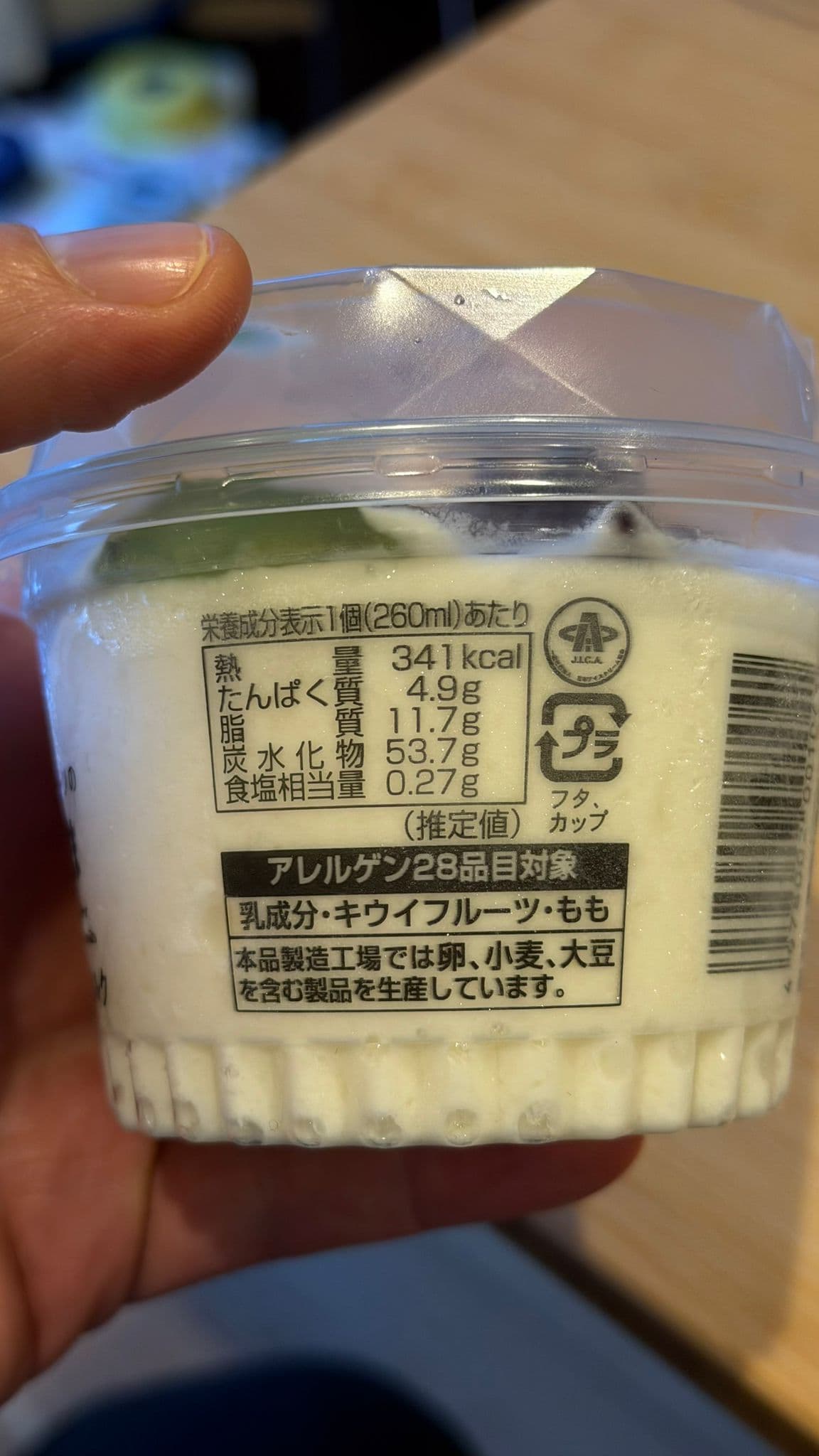
| Fruit | オレンジ, キウイフルーツ, バナナ, もも, りんご | Orange, kiwi fruit, banana, peach, apple |
| Other | 大豆, やまいも | Soy, yam |
Everything else is on neither list: fish other than salmon and mackerel, such as bonito and tuna; shellfish such as clams, oysters and scallops; nuts such as hazelnut; barley, malt, rye and oats. These show only in the ingredient list (原材料名, genzairyōmei), under their own names. The fish and shellfish guide and the gluten-free guide list the words to look for.
Where does a Japanese label name the allergens?
A Japanese label names an allergen in brackets after the ingredient that carries it, in one bracket that closes the ingredient list, or through the ingredient's own name, and many packs repeat the allergens in a separate box (CAA handbook, pages 8 to 10 and 13). Labels tested by Okaasan in November 2026 show each way, copied from their photos (how Okaasan tests):
| Where | What it looks like | On a label tested by Okaasan |
|---|---|---|
| After the ingredient | 醤油(小麦・大豆を含む), "soy sauce (contains wheat and soy)"; after an additive, (卵由来), "from egg" | A Kyoto chili-oil sesame furikake (京らー油ふりかけ): 食用植物油(大豆・ごまを含む), 醤油(小麦・大豆を含む), and its only egg last in the list, in 卵殻カルシウム(卵由来), eggshell calcium |
| At the end of the list | (一部に…を含む), "contains in part…" | Lawson L-kara fried chicken, 4 pieces, labelled by the store: 鶏から揚げ(鶏肉、大豆油、でんぷん、その他)…(一部に小麦・卵・乳成分・大豆・鶏肉・りんごを含む). Wheat, egg, milk and apple appear only in that bracket; the list doesn't say which ingredient holds them, and the chicken's own recipe ends in その他 (sonota, "other") |
| In the ingredient's name | 鶏卵 (hen's egg), 落花生 (peanut), 小麦粉 (wheat flour) | Nanao Seika taiko senbei, a peanut cookie: 小麦粉、砂糖、落花生、鶏卵… |
| A separate box | Headed アレルギー物質 or アレルゲン | The same senbei: アレルギー物質(特定原材料等) 小麦・卵・落花生・大豆 |
An allergen can also sit inside a compound ingredient. Lotte's Rummy rum raisin chocolate, tested by Okaasan in November 2026, names egg once in its list, inside 乳等を主要原料とする食品(卵を含む), "a food made mainly from milk (contains egg)". Its box, under the ingredient table, prints:
原材料に含まれるアレルギー物質(28品目中) 卵・乳成分・大豆
本品は小麦・マカダミアナッツを含む製品と共通の設備で製造しています。
In English: allergens in the ingredients (of 28 items): egg, milk, soy. Made on equipment shared with products containing wheat and macadamia nuts. When Okaasan tested this box on November 11, 2026, its AI's first reading of the label left the egg out in 2 analyses of 3; copying the allergen box in a separate step put it back both times (how Okaasan tests).

Contains egg. It hides in 乳等を主要原料とする食品(卵を含む), and the box names 卵. Wheat and macadamia: same factory.
What do 28品目 and 8品目 mean on an allergen box?
A count in brackets says which list a box covers: 28品目 or 29品目 means the required and the recommended items, 8品目 or 9品目 the required ones only (CAA handbook, page 18). Packs printed before April 1, 2026 count 8 and 28, since cashew nut was then a recommended item. A box limited to the required items says nothing about soy, sesame or the other recommended allergens.
7-Eleven's extra-small natto (極小粒納豆, 7 Premium), tested by Okaasan in November 2026, prints both kinds. The front reads 含まれているアレルゲン(8品目) 小麦 wheat: of the 8 required items, only wheat. The back prints all 28 in a grid headed 本商品に含まれているアレルゲンを枠内■にて表示(特定原材料及びそれに準ずるものを表示), "the allergens in this product are shaded (required and recommended items)", and shades 小麦 and 大豆. Soy is the natto itself, 丸大豆 (whole soybeans) being its first ingredient, and the front box leaves it out because soy is only recommended.
What does a factory warning mean?
A factory warning, such as 本品製造工場では…を含む製品を製造しています ("this factory also makes products containing…"), names an allergen that isn't an ingredient but is handled in the same factory, on the same line or with the same equipment. It is voluntary: the Consumer Affairs Agency recommends it when a trace can't be ruled out, and bans vague "may contain" wording such as 入っているかもしれません (CAA handbook, pages 26 and 27; Nagoya City). A pack without one is no proof that no trace is there.
Factory warnings on labels tested by Okaasan in November 2026:
| Product | Ingredients | Factory warning, as printed |
|---|---|---|
| Tamura Seimen somen (そうめん) | 小麦粉(国内製造)、食塩 (wheat flour, salt) | 本品製造工場では、そば・山芋を含む製品を同一ラインで生産しています。 Buckwheat and yam products on the same line |
| Nanao Seika taiko senbei | Wheat, peanut, egg, soy | 本品製造工場では乳成分・アーモンド・オレンジ・ごま・りんごを含む製品を製造しております。 Milk, almond, orange, sesame and apple in the same factory |
| Lotte Rummy | Egg, milk, soy | 本品は小麦・マカダミアナッツを含む製品と共通の設備で製造しています。 Wheat and macadamia on shared equipment |
Buckwheat: same factory. Products with そば share its line (同一ライン); the ingredients are only wheat flour and salt.
The guide to 無添加 and same-factory labels explains the wording and what it does and doesn't say.
What should you know for each allergen in Japan?
Each allergen has its own gaps on a Japanese label; milk, wheat, and fish and shellfish have a guide of their own.
| Allergy | On the label | What to know |
|---|---|---|
| Milk | 乳, 乳成分: required | 乳化剤 (emulsifier), 乳酸 (lactic acid) and 豆乳 (soy milk) aren't milk; バター, チーズ and カゼイン are. See dairy-free in Japan |
| Wheat, gluten | 小麦: required | Barley (大麦), malt (麦芽), rye and oats are on no list. Most soy sauce is brewed with wheat (JETRO), and tamari (たまりしょうゆ) may hold a little grain under its JAS definition. See gluten-free in Japan |
| Shrimp, crab, fish | えび, かに: required; いか, あわび, いくら, さけ, さば: recommended | Bonito, tuna, clams and oysters are on no list, and dashi is usually fish. See fish and shellfish allergies |
| Egg | 卵, also 鶏卵: required | Can hide in a compound ingredient, or show only in the closing bracket, as on Rummy and the L-kara |
| Peanut, tree nuts | 落花生, くるみ, カシューナッツ: required; アーモンド, マカダミアナッツ, ピスタチオ: recommended | Hazelnut, pecan and other nuts are on no list |
| Buckwheat | そば: required | Noodle shops may boil udon in the same water as soba (below) |
| Soy, sesame | 大豆, ごま: recommended only | A box counting only the required items leaves them out, as on the natto |
Which foods have no allergen label?
Japan's allergen labelling covers packaged food only. As of November 2026, the duty depends on how the food is sold:
| Food | Allergen label | Source |
|---|---|---|
| Packaged food: supermarket packs, konbini onigiri, bento and sandwiches | Required for the 9; the 20 when the maker shows them | CAA handbook |
| Food made and sold in the same shop without a package, even when boxed or wrapped at the till: a bakery's bread, a deli counter, food sold by weight | Not required | CAA allergen Q&A, C-1; Nagoya City |
| Restaurants, take-away counters, food stalls | Not required; the agency encourages them to inform | CAA allergen Q&A, I-7; Sakai City |
| Alcoholic drinks (酒類): beer, sake, wine, chūhai | Not required, even when made from wheat | CAA allergen Q&A, C-9; Food Safety Commission |
Konbini hot snacks sold from the counter have no pack label. 7-Eleven and Lawson list their allergens on their websites, and Lawson notes that a store's product can differ from its site and may share preparation with products holding other allergens (7-Eleven Japan; Lawson). The konbini guide has more.
How do you explain an allergy in a Japanese restaurant?
Tell the staff before you order, ask them to check with the kitchen, and for a serious allergy, show it in writing: a menu gives a dish's name, not its recipe. Put the allergen's Japanese name from the lists above in place of (…); for fish in general, 魚 (sakana), for nuts, ナッツ類 (nattsu-rui).
| Japanese | Say it | Meaning |
|---|---|---|
| 〇〇アレルギーがあります。 | (…) arerugī ga arimasu. | I have a (…) allergy. |
| これに〇〇は入っていますか? | Kore ni (…) wa haitte imasu ka? | Is there (…) in this? |
| 少しでも食べられません。 | Sukoshi demo taberaremasen. | I can't eat even a little. |
| 命に関わります。 | Inochi ni kakawarimasu. | It is life-threatening. |
| 厨房に確認していただけますか? | Chūbō ni kakunin shite itadakemasu ka? | Could you check with the kitchen? |
| 同じ油で揚げていますか? | Onaji abura de agete imasu ka? | Is it fried in the same oil? |
| うどんとそばは同じ釜でゆでていますか? | Udon to soba wa onaji kama de yudete imasu ka? | Do you boil udon and soba in the same pot? |
Buckwheat needs that last question. Its allergen dissolves in water and survives heat, so udon boiled in the same pot as soba can cause a reaction, and Japan's Food Safety Commission notes that people with a buckwheat allergy are advised not to eat at restaurants that serve soba (Food Safety Commission, buckwheat factsheet, March 2025). The Japan noodle restaurant federation (日本麺類業団体連合会) gives shops a model notice for their menus: 当店ではそばとうどんを一緒の釜でゆでています, "this shop boils soba and udon in the same pot" (accident prevention guide).
The izakaya menu guide shows which dishes hide dashi, pork or alcohol, and what a menu can't tell.
What to do in an allergy emergency in Japan
Call 119 for an ambulance (救急車, kyūkyūsha) and 110 for the police (JNTO; Tokyo Metropolitan Government). Fire departments can add an interpreter to a 119 call: in Tokyo in English, Chinese, Korean, Portuguese and Spanish, in Sakai in six languages including Vietnamese; the languages vary by city (Tokyo Metropolitan Government; Sakai City).
- Japan Visitor Hotline. Run by the Japan National Tourism Organization (JNTO), 050-3816-2787 (+81-50-3816-2787 from abroad), 24 hours a day, in English, Chinese and Korean, for accidents, illness and disasters (JNTO; Tokyo Metropolitan Government).
- Hospitals that speak your language. JNTO's guide for when you feel ill searches hospitals and clinics by area, department and language (JNTO; Tokyo Metropolitan Government).
- Your own medicine. Japan lets a traveller bring up to one month's supply of a prescription medicine without paperwork, self-injection kits and pre-filled syringes included; more needs an import confirmation obtained before you leave. Narcotics, psychotropics and stimulants have rules of their own (Ministry of Health, Labour and Welfare; Japan Customs). For adrenaline auto-injectors such as the EpiPen, the ministry's import Q&A sets the limit without paperwork at 2, a spare included (Ministry of Health, Labour and Welfare, import Q&A 50, June 2025). How many to carry, and when to use one, are questions for your doctor.
| Japanese | Say it | Meaning |
|---|---|---|
| 救急車を呼んでください。 | Kyūkyūsha o yonde kudasai. | Please call an ambulance. |
| アナフィラキシーです。 | Anafirakishī desu. | It's anaphylaxis. |
| 〇〇アレルギーです。 | (…) arerugī desu. | I have a (…) allergy. |
| エピペンを持っています。 | Epipen o motte imasu. | I have an EpiPen. |
How Okaasan reads allergens on a label
Okaasan checks every label scan against the allergens in your profile, and shows each one as contained, as made in the same factory, or as not listed, the last only when it has read the ingredient list.
- Your allergens, in your words. You type them under "My allergens", in English, French, Chinese or Japanese. Okaasan matches each one against the words labels use for Japan's 29 listed allergens and for groups such as fish, shellfish and nuts, and leaves out look-alikes: 乳化剤 (emulsifier) and 豆乳 (soy milk) aren't milk.
- Four answers per allergen. An allergen the label contains turns the verdict to "Not for you". One named only in a factory warning shows as "Peanut: same factory", in amber, never as not listed. "No peanut listed" appears only when the ingredient list was read; without it, "Peanut: ingredients not read".
- The factory warning and the box, in a step of their own. Okaasan reads the factory warning and copies the allergen box in a separate call. An allergen the box names and the first reading missed is added as contained, as with Rummy's egg; nothing is ever taken away.
- Limits. Okaasan reads what the label prints. A trace no warning mentions, a recipe change or small print lost in a blurry photo can't be caught. On a menu, allergens are deductions from a dish's name. For a serious allergy, the maker or the staff have the last word.
General AI assistants can miss factory warnings. In Okaasan's test of November 12, 2026 on 115 real Japanese labels, Claude (Opus 5.5) answered "no" for milk, soy or seafood 21 times where the label names that allergen in its factory warning, and Gemini (Auto) missed a printed allergy warning 23 times; ChatGPT (GPT-6.1) missed none. Okaasan missed none in 345 analyses, 3 per product. Each assistant answered once per product, to a prompt written for the test, on products chosen for their traps: a dated test result, not a guarantee (how Okaasan tests).
FAQ
Which allergens must Japanese food labels declare?
Nine, on all packaged food: egg, milk, wheat, buckwheat, peanut, shrimp, crab, walnut and cashew nut, required since April 1, 2026. Twenty more, including soy, sesame, salmon, mackerel, beef, chicken, pork and gelatin, are only recommended. As of November 2026, packs may follow the old rule for cashew until March 31, 2028.
Do restaurants in Japan have to list allergens?
No. Allergen labelling is required only on packaged food. Restaurants, take-away counters, food sold loose and food made and sold in the same shop without a package have no obligation, so tell the staff and show a serious allergy in writing.
Is tamari soy sauce wheat-free?
Not always. Japan's JAS standard defines tamari (たまりしょうゆ) as made mainly from soybeans, with or without a little grain, so a tamari can contain wheat. Read its ingredient list for 小麦 (wheat) and 大麦 (barley). Most Japanese soy sauce, the koikuchi kind, is brewed from soybeans and about as much grain, usually wheat.
What does 28品目 mean on a Japanese label?
It means the allergen box covers the 28 items listed before April 2026: the 8 required allergens and the 20 recommended ones. 8品目 means only the required ones, so soy, sesame and the other recommended allergens aren't checked there. Newer packs count 9 and 29.
Can I bring an EpiPen to Japan?
Yes. Japan's Ministry of Health lets a traveller bring adrenaline auto-injectors such as the EpiPen without paperwork, up to 2, a spare included. More than that needs an import confirmation obtained before departure. How many to carry is a question for your doctor.
What number do I call for an ambulance in Japan?
119, for ambulance and fire; 110 is the police. Fire departments can add an interpreter to the call, in languages that vary by city. JNTO's Japan Visitor Hotline, 050-3816-2787, helps with illness in English, Chinese and Korean, 24 hours a day.
Check the label before you buy
The bracket after an ingredient, the bracket that closes the list, the allergen box and the factory warning under it: scan the label with Okaasan and it checks them against the allergens in your profile, with factory warnings shown apart. From $9 a month, or $14 once for a 31-day Traveler Pass. For a serious allergy, the maker or the staff have the last word.