Japanese convenience store (konbini, コンビニ) meals range widely in salt and energy, and each packaged one prints its own figures: Japan's Food Labeling Standards (食品表示基準) require energy, protein, fat, carbohydrate and salt equivalent (食塩相当量, shokuen sōtōryō) on packaged food (Consumer Affairs Agency). On 10 konbini labels tested by Okaasan in November 2026, salt ran from 0.0 g in a tray of plain rice to 4.0 g in a fresh pasta, and a Lawson chicken nanban rice bowl had 3.1 g. Japan's Dietary Reference Intakes (2025 edition) set a daily target of under 7.5 g of salt for men and under 6.5 g for women (Ministry of Health, Labour and Welfare), and the WHO advises adults to stay under 5 g (WHO).
The labels below are part of the 115 Japanese products in Okaasan's label tests, each read again on its photo. The figures are those printed on the packs tested (the use-by dates shown run from 2023 to 2026), and recipes change. The rules are as of November 2026.
What does a konbini label say about nutrition?
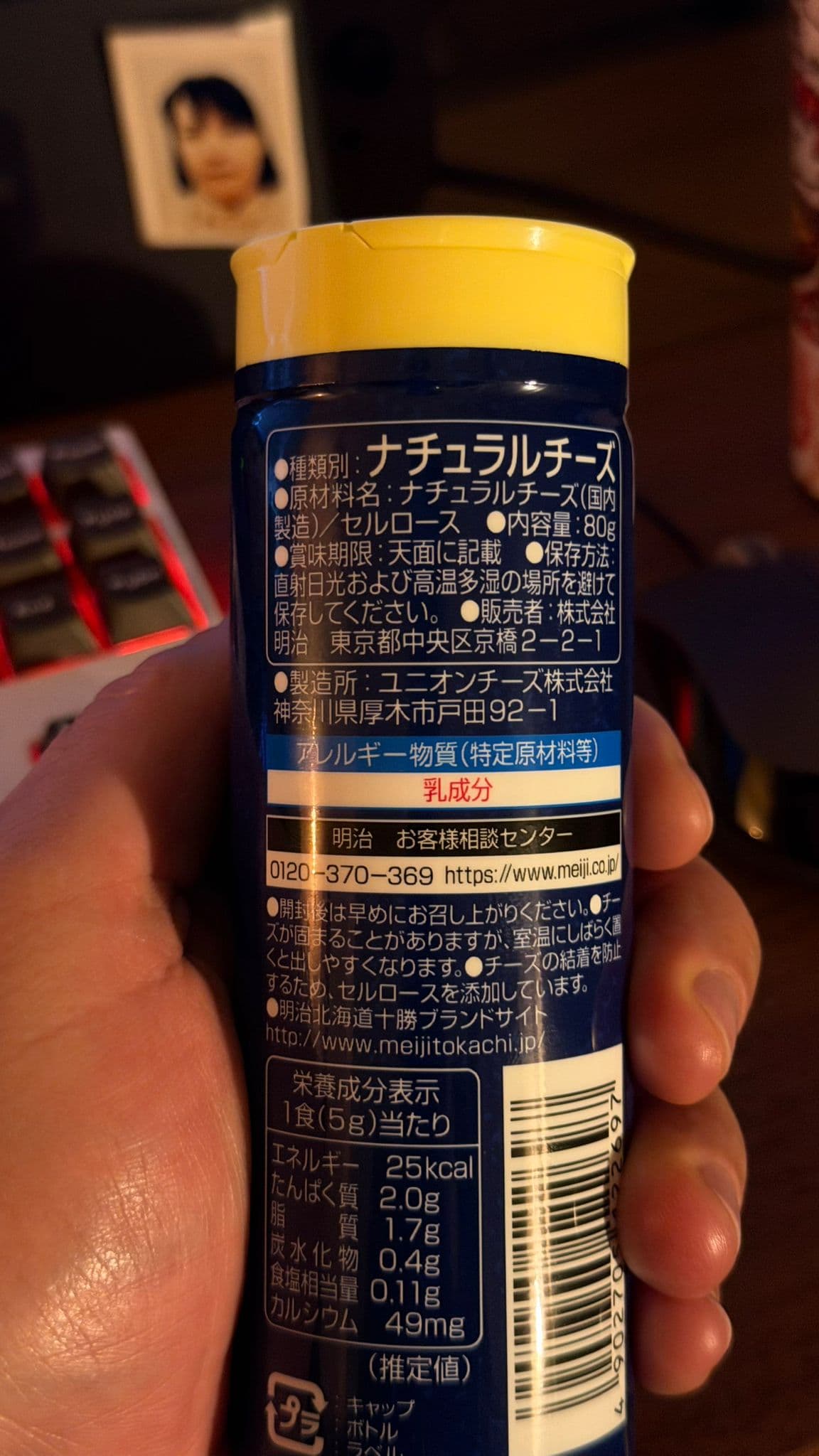
A packaged konbini item prints a nutrition table, 栄養成分表示 (eiyō seibun hyōji), and on 9 of the 10 labels tested the figures are for the whole pack or item: 1包装当り (ippōsō atari) means "per pack". The natto gives them for one of its three sets. The standards require five figures (Consumer Affairs Agency; Osaka City):
| Japanese | Reading | Meaning | What to know |
|---|---|---|---|
| 熱量, エネルギー | netsuryō, enerugī | Energy | In kcal |
| たんぱく質, 蛋白質 | tanpakushitsu | Protein | Both spellings appear on the tested labels |
| 脂質 | shishitsu | Fat | All fats and oils together |
| 炭水化物 | tansuikabutsu | Carbohydrate | Often followed by 糖質 (tōshitsu, carbohydrate minus fibre) and 食物繊維 (shokumotsu sen'i, fibre) |
| 食塩相当量 | shokuen sōtōryō | Salt equivalent | Sodium in mg × 2.54 ÷ 1,000 |
The salt line is the sodium converted to salt, with the formula from the Consumer Affairs Agency's nutrition labelling guideline (page 34) and Osaka City. Three more things explain most konbini stickers:
- 推定値 means estimated. 9 of the 10 labels print 推定値 (suiteichi, estimate) or この表示値は、目安です ("these values are a guide"); only the 7-Eleven chicken sandwich prints neither. Article 3 of the Food Labeling Standards lets a maker print figures worked out from the ingredients or from similar foods, rather than from an analysis of the product itself, when the label says so with one of these phrases and the maker keeps the records behind them. Without them, an analysis of the product must find values within 20% of the printed ones, with fixed margins for very small amounts; an estimate has no set margin (CAA guideline, pages 42, 43 and 48; Osaka City).
- Not every konbini food has a table. Food made and sold on the same premises, such as side dishes cooked in the store, doesn't need one, and a daily bento whose recipe changes within three days (日替わり弁当, higawari bentō) can leave it out (Food Labeling Standards, articles 3 and 5; CAA guideline, pages 12 and 14; Osaka City). The table is required on food packed in advance, so fried chicken bagged at the counter needs none (Osaka City). The Lawson L-kara and chicken nanban bowl tested name a Lawson store as maker (製造者, seizōsha), the L-kara's fried chicken itself being made in China (中国製造), and print a table anyway.
- The chains publish their figures online. 7-Eleven and Lawson list the nutrition and allergens of their products on their websites, hot snacks included (7-Eleven Japan; Lawson). Lawson adds that a store's product can differ from the website by region or after a change, and that products may share preparation with others containing other allergens.
How much salt is in konbini meals?
On the 10 konbini labels tested by Okaasan, salt ran from 0.0 g to 4.0 g per pack (per set for the natto): 1.3 g and 1.5 g in two onigiri, 1.6 g and 1.9 g in two sandwiches, 3.1 g in a rice bowl and 4.0 g in a fresh pasta. Each row is copied from the label photo:
| Product | Energy | Protein | Fat | Carbohydrate (糖質) | Salt |
|---|---|---|---|---|---|
| Lawson 大盛りコシヒカリごはん (plain cooked rice, 250 g tray) | 373 kcal | 5.8 g | 1.3 g | 85.3 g (83.8 g) | 0.0 g |
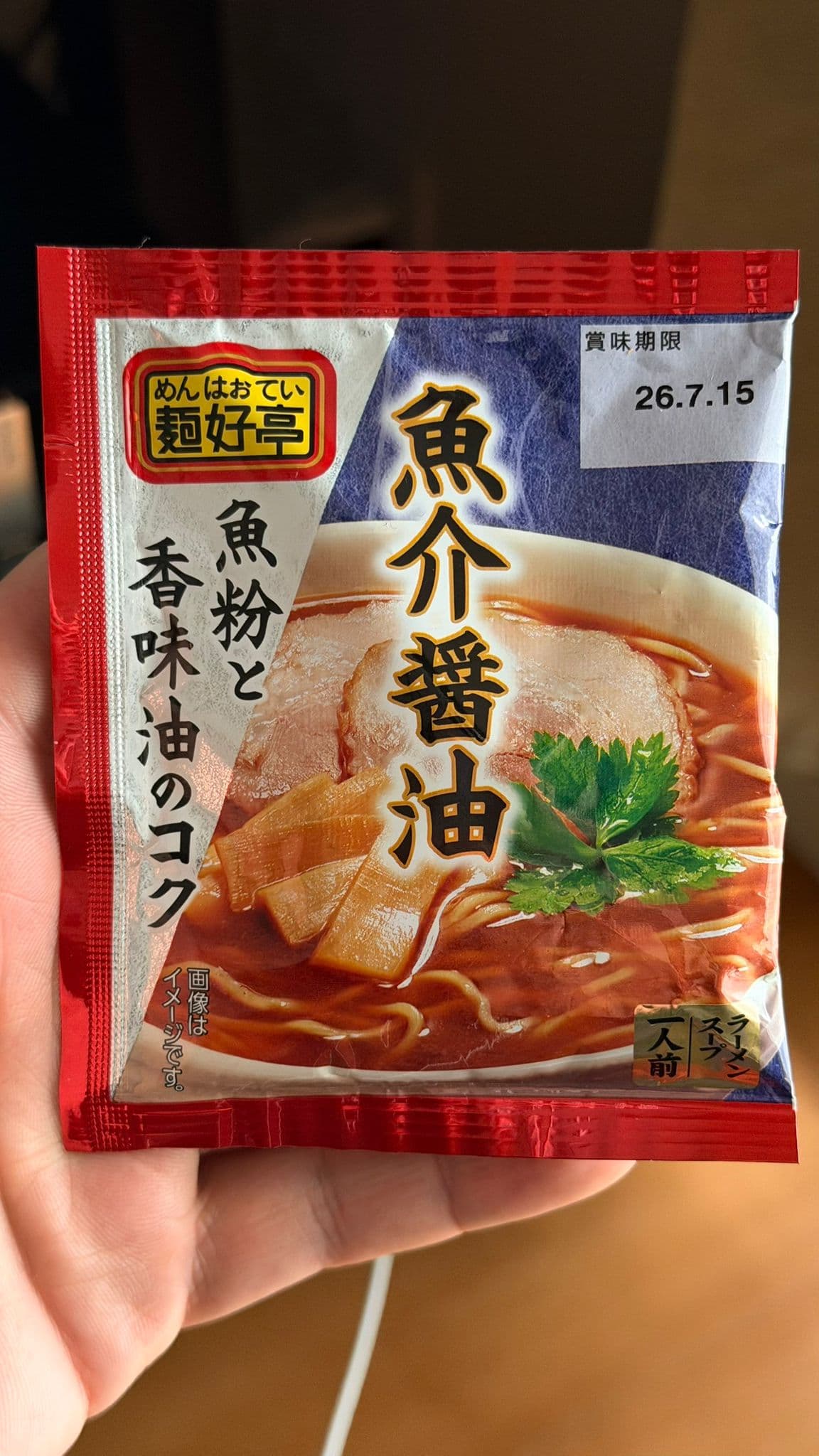
| 7-Eleven 極小粒納豆 (natto), one set of beans, sauce and mustard, 51.6 g | 91 kcal | 7.6 g | 4.4 g | 7.1 g (3.4 g) | 0.6 g |
| 7-Eleven ふんわりメロンパン (melon pan, a sweet bun) | 342 kcal | 7.2 g | 10.5 g | 55.4 g (54.0 g) | 0.63 g |
| 7-Eleven かやくごはんおむすび (seasoned rice onigiri, sold in Kansai) | 159 kcal | 3.5 g | 1.3 g | 34.0 g (32.4 g) | 1.3 g |
| 7-Eleven 直巻おむすび コンビーフマヨネーズ (corned beef mayo onigiri) | 220 kcal | 4.8 g | 5.3 g | 39.3 g (37.4 g) | 1.5 g |
| たまごサンド (egg sandwich) | 412 kcal | 10.3 g | 30.5 g | 24.7 g (23.7 g) | 1.6 g |
| 7-Eleven たんぱく質が摂れるチキン&レタスサンド (chicken and lettuce sandwich) | 186 kcal | 18.9 g | 5.6 g | 16.2 g (13.8 g) | 1.9 g |
| Lawson Lから (L-kara fried chicken), 4 pieces, labelled by the store | 367 kcal | 17.5 g | 25.5 g | 17.6 g (16.2 g) | 2.1 g |
| Lawson 鹿児島県産桜島どりのチキン南蛮丼 (chicken nanban rice bowl), labelled by the store | 596 kcal | 28.5 g | 18.1 g | 81.5 g (78.0 g) | 3.1 g |
| Yamawo 生パスタ チーズボロネーゼ (fresh cheese bolognese pasta) | 513 kcal | 24.1 g | 16.3 g | 69.7 g (66.2 g) | 4.0 g |
The chain is printed on five of these labels: Lawson as seller (販売者, hanbaisha) on the rice, the Seven Premium logo of 7-Eleven's group on the natto, 7-Eleven on the chicken sandwich's wrapper, and a Lawson store as maker on the L-kara and the bowl. The two onigiri and the melon pan name only their maker, so their chain is the one recorded in Okaasan's test set; the egg sandwich and the pasta are given without one. The natto label also gives the 45 g of beans alone, with 0 g of salt: the set's 0.6 g comes from the sauce and the mustard.
How much salt a day do Japan and the WHO advise?
Japan's Ministry of Health, Labour and Welfare sets a target of under 7.5 g of salt a day for adult men and under 6.5 g for adult women; the WHO advises under 5 g. The details:
- Japan. The Dietary Reference Intakes, 2025 edition (日本人の食事摂取基準), are used from April 2025 to March 2030. Their salt target (目標量, mokuhyōryō) for adults is under 7.5 g for men and under 6.5 g for women, and under 6.0 g to keep high blood pressure or chronic kidney disease from getting worse (MHLW slides, slide 102; period of use; Ministry of Agriculture, Forestry and Fisheries).
- Why Japan's figure is higher. The target is what Japanese adults should aim for "for the time being" (当面の目標, tōmen no mokuhyō), set with what they eat today in mind (MHLW slides, slide 10; Japan Foundation for Aging and Health). The adult figure was worked out halfway between the WHO's 5 g and the salt Japanese adults ate in the 2018 and 2019 national nutrition surveys, then rounded down (MHLW slides, slide 100; research report behind the 2025 edition, page 2).
- The WHO. Under 5 g of salt a day for adults, which is 2 g of sodium (WHO, salt reduction; WHO, healthy diet). Okaasan's note gives the salt against these 5 g when a serving has 1.5 g or more.
Each tested pack against the day:
| Product | Salt | Japan, men (7.5 g) | Japan, women (6.5 g) | WHO (5 g) |
|---|---|---|---|---|
| Plain cooked rice | 0.0 g | 0% | 0% | 0% |
| Natto, one set | 0.6 g | 8% | 9% | 12% |
| Melon pan | 0.63 g | 8% | 10% | 13% |
| Seasoned rice onigiri | 1.3 g | 17% | 20% | 26% |
| Corned beef mayo onigiri | 1.5 g | 20% | 23% | 30% |
| Egg sandwich | 1.6 g | 21% | 25% | 32% |
| Chicken and lettuce sandwich | 1.9 g | 25% | 29% | 38% |
| L-kara, 4 pieces | 2.1 g | 28% | 32% | 42% |
| Chicken nanban rice bowl | 3.1 g | 41% | 48% | 62% |
| Fresh cheese bolognese pasta | 4.0 g | 53% | 62% | 80% |
The figures add up over a day:
- The two onigiri and the chicken sandwich come to 4.7 g of salt and 565 kcal: 63% of the men's target, 72% of the women's and 94% of the WHO's 5 g.
- The chicken nanban bowl and the L-kara, both from Lawson, come to 5.2 g of salt, more than the WHO's 5 g.
The chicken nanban bowl, labelled by a Lawson store as 名称:弁当 (name: bento), prints on its sticker:
栄養成分表示(1包装当り) 熱量596kcal、蛋白質28.5g、脂質18.1g、炭水化物81.5g(糖質78.0g、食物繊維3.5g)、食塩相当量3.1g(推定値)

Not halal, vegetarian, vegan or gluten-free: 鶏唐揚げ (fried chicken), not marked halal, and 小麦 (wheat) in the allergen bracket. The whole bowl has 3.1 g of salt, 62% of the 5 g a day.
How much sugar is in konbini food?
A Japanese nutrition label doesn't have to show sugar: 炭水化物 (tansuikabutsu, carbohydrate) is required, while 糖質 (tōshitsu) and 糖類 (tōrui, sugars) are optional lines (CAA guideline, page 11; Osaka City). None of the 10 konbini labels tested prints 糖類; their 糖質 figure is carbohydrate minus fibre, which counts starch and sugar together.
The ingredient list gives the order instead: Japanese labels list ingredients by weight, heaviest first (Food Labeling Standards, article 3; Osaka Prefecture). In the melon pan, 砂糖 (satō, sugar) comes second, after 小麦粉 (wheat flour). In the natto's sauce, 果糖ぶどう糖液糖 comes second, after しょうゆ (soy sauce).
| Japanese | Reading | Meaning | On the tested konbini labels |
|---|---|---|---|
| 砂糖 | satō | Sugar | Melon pan, both onigiri, chicken sandwich |
| 果糖ぶどう糖液糖 | katō budōtō ekitō | Fructose-glucose syrup | Natto sauce |
| 砂糖混合ぶどう糖果糖液糖 | satō kongō budōtō katō ekitō | Glucose-fructose syrup mixed with sugar | Natto sauce |
| 水飴, 水あめ | mizuame | Starch syrup | Natto mustard |
Okaasan's note quotes sugar only when a label prints 糖類 and a serving has 15 g or more, against 50 g a day: the WHO's limit for free sugars is under 10% of energy, about 50 g at 2,000 kcal (WHO, healthy diet; WHO, 2015). On these 10 labels it can't. What 糖質, 糖類 and "zero" claims mean is in the guide to carbs and sugar on Japanese labels.
What additives are in konbini meals?
9 of the 10 konbini labels tested list additives, after a slash (/) that closes the other ingredients; the plain rice lists only rice, うるち米 (uruchimai). On the 10 labels:
| As printed | Reading | Meaning | Labels that list it |
|---|---|---|---|
| 糊料, 増粘剤, 増粘多糖類 | koryō, zōnenzai, zōnen tatōrui | Thickeners | 8 of 10 |
| 調味料(アミノ酸等), 調味料(アミノ酸) | chōmiryō (aminosan tō) | Seasoning: amino acids such as MSG | 7 of 10 |
| pH調整剤, グリシン, 酢酸Na | pī-eichi chōseizai, gurishin, sakusan natoriumu | pH adjuster, glycine, sodium acetate | 6 of 10 |
| 乳化剤 | nyūkazai | Emulsifier (not milk) | 5 of 10 |
| 着色料, カロチノイド色素, パプリカ色素 | chakushokuryō, karochinoido shikiso, papurika shikiso | Colourings (carotenoid, paprika, caramel, turmeric, gardenia) | 5 of 10 |
| 香料 | kōryō | Flavouring | 3 of 10 |
| 発色剤(亜硝酸Na) | hasshokuzai (ashōsan natoriumu) | Colour fixative: sodium nitrite | The corned beef onigiri |
- No preservatives by name. None of the 10 lists 保存料 (hozonryō, preservative). Additives that only slightly extend shelf life (日持ち向上剤, himochi kōjōzai) aren't labelled as 保存料, only by their own names (Hiroshima Prefecture), and the Consumer Affairs Agency's 2022 guideline flags 保存料不使用 ("no preservatives") on a food that uses another additive to keep longer (CAA guideline, kind 4). The guide to 無添加 and same-factory labels covers these claims.
- NOVA group 4, by its own rule. NOVA, a classification used in nutrition research, sorts foods by the industrial processing they go through, and puts a food in group 4, "ultra-processed foods", when its ingredient list holds even one flavouring, flavour enhancer, colouring, emulsifier or thickener (FAO report, 2019, pages 6 and 10; Monteiro et al., Public Health Nutrition, 2019). Each of the 9 tested konbini items that list additives has at least one of these, so all 9 fall in group 4 by that rule; the plain rice lists no additive. The NOVA group and the Nutri-Score that Okaasan shows on a scan are estimates read from the label.
What do konbini labels show for vegetarian, halal and allergies?
A konbini label's allergen bracket, (一部に…を含む) (ichibu ni … o fukumu, "contains in part"), can name what the ingredient list doesn't: on the tested labels it named 豚肉 (butaniku, pork) in a corned beef onigiri and さば (saba, mackerel) in a seasoned rice onigiri. In the table, "Yes" means the label lists nothing that rules the diet out, as Okaasan's safety net reads it; it is not a certification.
| Product | What decides it, as printed | Vegan | Vegetarian | Halal |
|---|---|---|---|---|
| Plain cooked rice | うるち米 (rice), the only ingredient | Yes | Yes | Yes |
| Egg sandwich | 卵サラダ (egg salad), 乳成分 (milk) in the bracket; 乳化剤 (emulsifier) without its source | No | Yes | Unclear |
| Melon pan | 脱脂粉乳 (skimmed milk powder), 液卵 (liquid egg); マーガリン (margarine) without its fats | No | Unclear | Unclear |
| Natto, one set | かつお節エキス (bonito extract) and アルコール (alcohol) in the sauce | No | No | No |
| Seasoned rice onigiri | 鶏肉 (chicken), ちくわ (fish paste), だし (stock); さば (mackerel) in the bracket | No | No | No |
| Corned beef mayo onigiri | コンビーフ (corned beef); 豚肉 (pork) and ゼラチン (gelatin) in the bracket | No | No | No |
| Chicken and lettuce sandwich | ローストチキン (roast chicken), not marked halal | No | No | No |
| L-kara | 鶏肉 (chicken), not marked halal | No | No | No |
| Chicken nanban rice bowl | 鶏唐揚げ (fried chicken), not marked halal | No | No | No |
| Fresh cheese bolognese pasta | 豚肉 (pork) and ゼラチン (gelatin) in the bracket; 酒精 (alcohol) | No | No | No |
All but the plain rice name 小麦 (komugi, wheat). The corned beef onigiri's full list is in the halal guide, and the natto's allergen boxes and the L-kara's その他 (sonota, "other") in the food allergy guide.
The natto's beans are 丸大豆 (whole soybeans) and 納豆菌 (natto bacteria) only. The sauce in the same pack prints:
【たれ】しょうゆ(小麦・大豆を含む)、果糖ぶどう糖液糖、食塩、砂糖混合ぶどう糖果糖液糖、醸造酢、かつお節エキス(大豆を含む)、昆布エキス/アルコール、調味料(アミノ酸等)
In English: sauce: soy sauce (contains wheat and soy), fructose-glucose syrup, salt, glucose-fructose syrup with sugar, brewed vinegar, bonito extract (contains soy), kelp extract / alcohol, seasoning (amino acids etc.).
Not vegan, vegetarian, halal or gluten-free: the sauce has かつお節エキス (bonito extract), アルコール (alcohol) and しょうゆ (soy sauce) with 小麦 (wheat).
General AI assistants don't all catch the sauce. In Okaasan's November 2026 test on 115 real labels, ChatGPT (GPT-6.1) and Claude (Opus 5.5) answered "not vegetarian" for this natto, while Gemini (Auto) answered vegan, vegetarian and gluten-free, though it also answered that the natto contains seafood. Before its safety net, Okaasan's AI called it vegan and vegetarian in 3 analyses out of 3; after it, Okaasan showed it as not vegetarian each time: a dated test result, not a guarantee (how Okaasan tests).
For an allergy, a hot snack bagged at the counter has no pack label to read, and Lawson's site says its products may share preparation with others containing other allergens. For a serious allergy, the staff or the maker have the last word.
FAQ
Is Japanese convenience store food healthy?
The labels answer it item by item: each pack prints its energy, protein, fat, carbohydrate and salt. On 10 konbini labels tested by Okaasan in November 2026, salt ran from 0.0 g (plain rice) to 4.0 g (a fresh pasta), against Japan's daily targets of under 7.5 g for men and 6.5 g for women and the WHO's 5 g.
Can you eat konbini food every day?
The labels let you add up a day. Two onigiri and a chicken sandwich tested by Okaasan come to 4.7 g of salt and 565 kcal, 94% of the WHO's 5 g of salt. What suits your own health is a question for a doctor or a dietitian.
How much salt is in a konbini onigiri?
On two 7-Eleven onigiri tested by Okaasan, 1.3 g (seasoned rice) and 1.5 g (corned beef mayo) per onigiri, printed as 食塩相当量. A 250 g tray of plain cooked rice from Lawson prints 0.0 g.
How much salt a day is recommended in Japan?
Under 7.5 g for adult men and under 6.5 g for adult women, in the Ministry of Health, Labour and Welfare's Dietary Reference Intakes (2025 edition), and under 6.0 g to keep high blood pressure or chronic kidney disease from getting worse. The WHO advises adults to stay under 5 g.
Do konbini meals contain preservatives?
None of the 10 konbini labels tested by Okaasan lists 保存料 (preservative). Six list pH調整剤 (pH adjuster), グリシン (glycine) or 酢酸Na (sodium acetate) after the slash. A "no preservatives" claim on a food that uses another additive to keep longer is one that the Consumer Affairs Agency's 2022 guideline flags.
What does 推定値 mean on a Japanese nutrition label?
推定値 (suiteichi) means estimate: the figures were worked out from the ingredients or from similar foods, not from an analysis of the product itself. Japan's rules allow it with that word or この表示値は、目安です ("these values are a guide"). Without them, an analysis of the product must find values within 20% of the printed ones; an estimate has no set margin.
Check a konbini label in the shop
Scan the label with Okaasan: it reads the nutrition table and the ingredient list, gives the salt against the day, and checks the diets and allergens in your profile, the allergen bracket included. From $9 a month, or $14 once for a 31-day Traveler Pass.