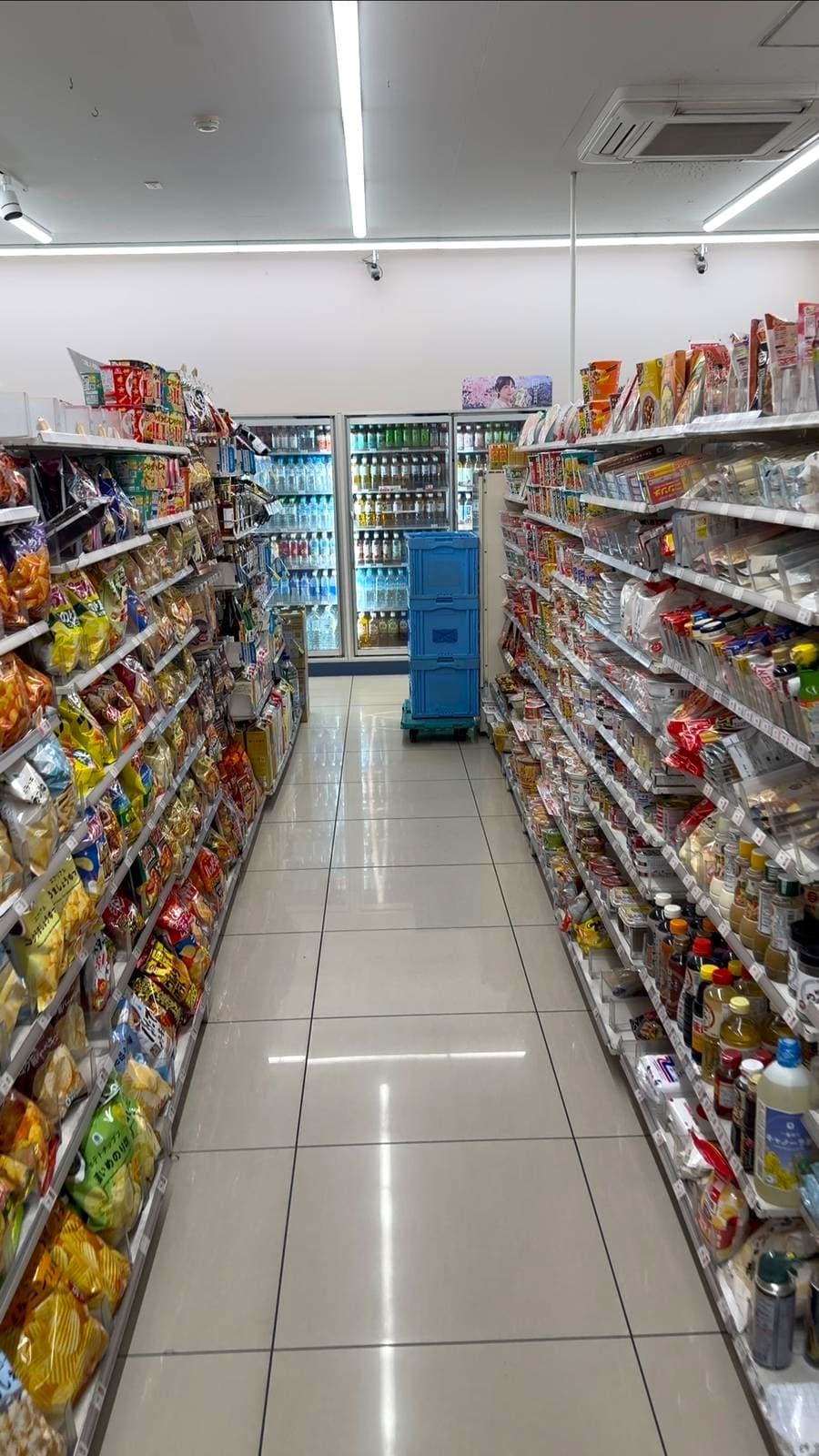
Japanese convenience stores, known as konbini, are famous for their quality. Chains like 7-Eleven, FamilyMart, and Lawson offer everything from fresh bento to salads, sandwiches, pasta, fried chicken, and desserts.
For many foreigners living in Japan, konbini meals become part of everyday life.
But are they actually healthy? Like, really?
The answer depends on what you choose and how often you eat them.
Why Konbini Food Feels Healthier Than Fast Food
Compared to many Western convenience foods, Japanese convenience store meals often look balanced and relatively fresh.
Common options include:
- rice bento with grilled fish or chicken
- vegetable salads with sesame dressing
- onigiri (rice balls) with tuna, salmon, or pickled plum
- cold soba or udon noodle sets
Portions also tend to be smaller and more controlled than typical fast-food meals.
Many products clearly display a 栄養成分表示 (eiyō seibun hyōji) nutrition table showing:
| Japanese | Reading | Meaning |
|---|---|---|
| エネルギー | enerugī | Calories |
| たんぱく質 | tanpakushitsu | Protein |
| 脂質 | shishitsu | Fat |
| 炭水化物 | tansuikabutsu | Carbohydrates |
| 食塩相当量 | shokuen sōtōryō | Salt equivalent |
This transparency helps consumers make informed choices.
The Main Nutritional Concerns
Even though konbini meals look balanced, several factors are worth paying attention to.
High Sodium
Salt content is often much higher than expected.
Examples:
- ramen or noodle soups
- curry rice
- fried chicken bento
- pasta with sauce
A single meal can contain half or more of the recommended daily sodium intake.
Look at the 食塩相当量 (shokuen sōtōryō) row in the nutrition table to check the salt amount.
Processed Ingredients
Many convenience store meals rely on processed components such as:
- sauces
- marinades
- seasoning mixes
- prepared meats
These often include additives listed under 添加物 (tenkabutsu).
Common ones include:
- 調味料(アミノ酸等): flavor enhancers
- 保存料: preservatives
- 増粘剤: thickeners
- 着色料: food coloring
This doesn't necessarily mean the food is unsafe, but it does mean the meal is more processed than it appears.
Hidden Sugar
Some Japanese ready meals contain surprisingly high sugar levels, especially in sauces.
Typical examples:
- teriyaki chicken
- simmered dishes (煮物)
- sweet soy sauces
- convenience store sandwiches
Sugar is often listed as:
- 砂糖 (satō): sugar
- 果糖ぶどう糖液糖: high-fructose corn syrup
- 水あめ: starch syrup
Healthier Konbini Choices
If you rely on convenience stores, small choices make a big difference.
Better options include:
Good choices
- grilled fish bento
- plain onigiri (salmon, kombu, ume)
- boiled eggs
- tofu salads
- cold soba noodles
- vegetable sides
Choices to limit
- creamy pasta
- deep-fried items
- instant ramen bowls
- heavy curry dishes
- sweet pastries and desserts
A Simple Rule: Combine Items
Instead of buying one heavy meal, many people build a balanced set from smaller items.
Example:
- one onigiri
- a salad
- boiled eggs or grilled chicken
- miso soup
This approach usually results in better nutrition and lower calories.
The Real Answer
Japanese convenience store food is not automatically healthy, but it is often healthier than typical fast food.
It sits somewhere in between:
fresh home cooking → konbini meals → fast food.
If eaten occasionally and chosen carefully, konbini meals can fit into a balanced diet.
The challenge is that ingredient lists and additives are difficult to read if you don't understand Japanese.
FAQ
Are konbini meals healthier than fast food?
Generally yes. Konbini meals tend to have smaller, more controlled portions and clearer nutrition labeling than typical fast food, but many are still high in sodium and contain processed additives.
What is the healthiest thing to eat at a Japanese convenience store?
Grilled fish bento, plain onigiri (salmon, kombu, ume), boiled eggs, tofu salads, and cold soba noodles are among the better choices. Creamy pasta, deep-fried items, and instant ramen bowls are best limited.
Is konbini food high in sodium?
Yes. Ramen, curry rice, fried chicken bento, and pasta with sauce can each contain half or more of the recommended daily sodium intake. Check the 食塩相当量 (shokuen sōtōryō) row on the nutrition label to see the salt amount.
Can you eat konbini food every day?
It is possible if you choose carefully and combine smaller items, such as an onigiri, a salad, and boiled eggs or grilled chicken, rather than one heavy processed meal. Relying daily on fried or creamy options is not recommended.
Understanding Konbini Food Instantly
Reading Japanese ingredient lists and additive names takes time if you don't understand the language.
If you want to understand a product instantly, you can scan the label with Okaasan.
Just take a photo and the app will show:
- full ingredient translation
- additives analysis with concern levels
- allergen detection
- nutrition facts
- dietary flags (vegan, halal, gluten-free)
Because knowing what's inside your food is the first step to eating better in Japan.